Monday, August 16, 2010

Dear Jeff Bezos, please make Kindle the greenest e-reader

I started considering buying a Kindle. I'm sure many people consider it given the latest price drop. But first I must know more about the Kindle's environmental and social impacts.

So I wrote an email to Jeff Bezos and see if he can help me here. I want to share it with you because I hope many more readers who share the same concerns will write Bezos about it, so he'll know that customers and potential customers really care about these issues. So you're more than welcome to email this text to Jeff Bezos at jeff@amazon.com.

I promise to update you once I receive a reply. In the meantime here's the email:

Dear Jeff,

I'm considering to buy the Kindle and I've got a request from you.

First, let me tell you I really like you and appreciate everything you have done so far to promote book reading. In 1994 you founded Amazon.com and revolutionized online bookselling. You changed the book industry forever. Now you can do it again.

My request is very simple: Please make sure the Kindle is as environmentally and socially friendly as possible and share the information about your efforts with me and other interested stakeholders.

I know you look at the Kindle a more than just a business. You look at it as a mission. You said it yourself to Fortune Tech:
"We think of it as a mission. I strongly believe that missionaries make better products. They care more. For a missionary, it's not just about the business. There has to be a business, and the business has to make sense, but that's not why you do it. You do it because you have something meaningful that motivates you."

This is great, but could you please add a "green" dimension to your mission?

I mean, I know you care about what customers say and you want to take their feedback into consideration to make the Kindle the best e-reader. You told Charlie Rose that people want "
purpose built device, where no tradeoffs have been made, where every single design decision as we walking down the process has been made to optimize for reading." That's true. But I really wish you would add the word "sustainable" just before "reading".

For me, no tradeoffs mean not just better screen, but also making sure no blood minerals are used for the Kindle, that it doesn't contain harmful and hazardous substances, and that it is made in a safe working environment,
where environmentally responsible manufacturing processes are used and workers are treated with dignity and respect, and use environmentally responsible manufacturing processes.

No tradeoffs also mean to me that you're doing the best you can to make sure Kindles will be recycled by users when they stop using them and that you will publish the Kindle's carbon footprint on a regular basis to show your progress.

Yes, I know you don't like to publish figures on the Kindle sales. But this is different. This is about transparency and about showing your customers that you care not just about business, but also about the environmental and social impacts of the e-reading revolution you're leading.

I don't want to sound like a paranoid, but I'm a bit more worried when I read Ron Adner's analysis on Huffington Post that
you have "drawn a clear line in the sand indicating that when it comes to digital reader devices, the company will focus on low-end, dedicated products." Adner explains that margins of the Kindle expect to decrease to zero. His conclusion is that " it means the company can stop heavy investment in developing reading devices, and instead focus on its clear competitive advantage: selling books." It's definitely reasonable from a business standpoint, but does it mean that there won't be a place for environmental and social considerations in the design/manufacturing process of the Kindle?

Jeff, I hope you can prove I'm worried for nothing. I hope you can show that you are interested in making the Kindle the greenest e-reader in the market. Not just because it's important for planet earth, but because it is important to me and to a growing number of readers who want to make their reading more sustainable.I believe you can lead another revolution here, bringing the mainstream not just a device that provides the opportunity to 'buy once, read everywhere,' but also a truly sustainable way to read books.

Thank you in advance for your consideration. I look forward to hearing from you.

Yours,
Raz @ Eco-Libris

Eco-Libris: Plant a tree for every book you read!

Saturday, August 14, 2010

Another reason to mooch books at BookMooch!


We wanted to remind you of our partnership with BookMooch, a great book-swapping community, with a simple and user-friendly point system, where every time you give someone a book, you earn a point and can get any book you want from anyone else at BookMooch.

With more than 74,000 members from over 90 countries and about 500,000 book titles that are available, there's always a good book you can mooch. Once you've read a book, you can keep it forever or put it back into BookMooch for someone else, as you wish. And yes, it's totally free. You only pay for mailing your books.

BookMooch and Eco-Libris are partnering to offer Green Mooching - a special bonus for bookmoochers who balance out their books: For every 10 books you balance out with Eco-Libris, you will receive one bookmooch point you can then use at BookMooch to mooch a book online for free (and If you don't have a BookMooch account yet go get one right now :)

The process is very simple – Email us your BookMooch username after you make a purchase on Eco-Libris website, or enter your BookMooch username in the comments box during the payment process. We will credit your BookMooch account accordingly.

Yours,
Raz @ Eco-Libris

Eco-Libris: Plant a tree for every book you read!

Thursday, August 12, 2010

5 comments on "Quick Change in Strategy for a Bookseller"

There's an interesting article on the New York Times today by Julie Bosman about the problems and the unclear future of Barnes & Noble.

Here are five thoughts on the issues she brings up in the article (each comment starts with the relates quote from the article):

1. “The shift from the physical to the digital book can pick up some of the economic slack, but it can’t pick up the loss that is created when you don’t have the customers browsing the displays,” said Laurence J. Kirshbaum, a literary agent. “We need people going into stores and seeing a book they didn’t know existed and buying it.”

Laurence Kirshbaum is right regarding the importance of exposure - a survey of Zogby International for Random House from 2008 (The Reading and Book Buying Habits of Americans) shows that although most people know what they want to buy when they go to bookstores, they're still likely to buy more books that they didn't plan to buy in advance.

Here's the data from the Zogby survey:

Do you very often, somewhat often , or not at all often go into a bookstore knowing exactly what you’re looking for?
Very often 38%
Somewhat often 43
Not at all often 17
Not sure 2

When you go into a bookstore for a specific book, do you ever make additional unplanned book purchases?
Yes 77%
No 19
Not sure 4

Nevertheless, this added value is also provided today by many online channels, not to mention recommendations on books you find while searching Amazon or other online stores. I know it's not the same as browsing the displays, but still I'm not sure how much the decline of brick and mortar stores will actually hurt our ability to get exposed to new books we haven't heard about before.

2. "Whoever ends up in control of Barnes & Noble’s 720 retail stores will have to grapple with the fundamental changes in the industry — and if the shift to e-books continues, prove that Barnes & Noble can be as successful on the digital side of bookselling as it has been for print."

I believe being successful on the digital side of their business is the easier part. The real challenge for whoever runs Barnes & Noble is to find how to make their brick and mortar bookstores an asset for the company and not a liability that will drag the company down.

3.
"William Lynch, the chief executive, said in an interview on Friday that the chain was retooling its stores to build up traffic, add products like educational toys and games, and emphasize its own e-reader, the Nook. “We think we’ve got the right strategy,” Mr. Lynch said. “The growth in our e-books business is about nine months ahead of our plan.""

What is exactly your strategy for the brick and mortar bookstores, Mr. Lynch? I certainly hope it's not just selling more toys and games and promoting the Nook. This won't be enough to sustain these stores.

4. “I’m in favor of anything that brings traffic in the store,” said Ms. Reidy of Simon & Schuster. “If it’s toys or games that brings a family into the bookstore, then I say fine.”

I am not sure how toys and games will bring more significant traffic to the stores, when these are already competitive markets with many established brands (Toys "R" Us for example) and a growing online market. I'm really skeptical if B&N can re-establish themselves as a games and toys preferable store that will attract enough customers to compensate for those who stopped coming because they buy books or e-books online. My suggestion to B&N? go for a green strategy!

5. "In a twist straight out of the movies, some publishers speculated that many of the independents that survived the big chains over the last 15 years might be in an unusually stable position... “Being small and privately held allows us to be more nimble,” said Chris Morrow, owner of the Northshire Bookstore in Manchester Center, Vt. “Our competitive advantage has been the curation aspect — knowing our customers and picking the right books"

Being small and independent has its own advantages and disadvantages. The problem is that many of B&N's fundamental problems (online sales, shift to e-books, recession) are the same problems independent bookstore are dealing with. What I'm saying is that independent bookstores also need to develop a strategy to succeed in the long term, no matter how good or bad B&N will eventually do.

My suggestion?
Couple of weeks ago I suggested here a model for independent bookstores that will provide customers with both personal benefits and the feeling that they're contributing to the prosperity of their own community. This model is based on creating a collaboration with other local businesses to enable these businesses to provide customers with discounts for each other.

More articles on the future of bookstores can be found at http://www.ecolibris.net/bookstores_future.asp

Yours,
Raz @ Eco-Libris


Eco-Libris: Promoting sustainable reading!

Wednesday, August 11, 2010

Green book of the week: Green Morality by Edward Flattau (including an interview with the author)


This week our green book is "Green Morality: Mankind's Role in Environmental Responsibility"
by the renowned environmental columnist Edward Flattau.

This book, with a title that looks more relevant to our life than ever, will be released next month, but was already described as “an easy-to-read must-read for all who love our planet and want to know the truth about what is happening to it." (Alex Shoumatoff, contributing editor and veteran environmental correspondent)

Published by Los Angeles independent social issues press, The Way Things Are Publications, “Green Morality” analyzes manmade global environmental atrocities supporting a theme that environmentalism must become a universal moral imperative to avert long-term environmental destruction. Flattau discusses topics ranging from corporate and industrial environmental immorality to failed public policies, and corrupt or immobilized political leaders. The book advocates a re-alignment of modern society’s value system and economic infrastructure in order to avert environmental destruction and create an environmentally and economically sustainable society.

After reading "Green Morality", I find Shoumatoff's description very accurate and I decided to ask the Flattau, who is the nation’s longest running syndicated environmental newspaper columnist with 40 years in the industry and columns in more than 120 daily newspapers, for an interview to learn more about his thought provoking book. Luckily he agreed and I have the pleasure of sharing it with you.

Hello, Ed. What inspired you to write this book?

Frustration at our failure to learn from the lessons of the past. The environmental problems of today are by and large, not new and solutions were developed decades ago. They were frequently not implemented then and the same holds true now. There is also my frustration at the partisan paralysis that has rendered our politicians virtually incapable of meeting their moral obligation to current as well as future generations. It is appalling to see how we are shortchanging future generations.


In the section about "the good", there seems to be a little about technology and a little about personal commitment and individual success stories. Is there really that little good in the larger environmental movement or the politics of sustainability?
Perhaps the most optimistic environmental development is the increased widespread public awareness of the threats to the planet’s ecology. Whether that translates into effective action across the board in time to avert irreversible harm is yet to be determined. Still, as I mentioned in the book, many corporations have become enlightened about incorporating efficiency and sustainability into their operations.


Biomimicry is far more than a passing fad as more and more people in all walks of life realize that to make nature an adversary rather than accomplice is a losing proposition. A voluntary simplicity lifestyle is sprouting up around the nation and there are an estimated 750,000 households off the grid and self-dependent on solar, wind, and other renewable sources of energy. One of the most hopeful trends of all is the greater environmental sensibility of our younger generations, thanks in large part to new progressive curriculums in our educational institutions.


You focus on consumption as a major barrier to upholding our moral imperative of conserving the earth. Changing consumption patterns is considered to be almost an impossible task in the affluent developed world. What do you see as the most important steps on this issue,and how fast do you think it could change.

A crucial step in changing our pattern of conspicuous consumption is to elevate quality over quantity. Durability and a high level of performance should be valued over volume and rapid turnover of possessions. Recycling should be routine and planned obsolescence totally discredited. Conservation should enjoy more prestige than consumption, and frugality should gain favor with the realization that it is not tantamount to deprivation. We are beginning to see this sea change in American society, but to get it up to proper speed, we need political leaders bold enough to show us the way, and up to now, there have been powerful few of those.


How would you suggest addressing the consumption gap in the developing world? isn't there a parallel moral imperative to enable them to catch up with the rest of us? what are some of the ways we could do that and at the same time protect the environment?

Addressing the consumption gap in the developing world will require us to set an example by adopting a sustainable lifestyle that provides the basic comforts of life without destroying the natural resources on which all living things depend. If we provide that existence as a goal, when the developing nations do approach our standard of living, they will spare the earth in the process. Setting an example for them means our placing an emphasis on conservation, quality over quantity, recycling and reuse over planned obsolescence, and health over profit (not in place of profit, mind you). Those values will provide a comfortable standard of living while leaving the earth’s life support system in tact.


What do you hope that your readers will take away from your book?

I hope readers will embrace the moral values referenced in the book not only in words but in actions. I also hope they will be convinced that we do have the capabilities to meet the formidable environmental challenges of the 21st Century.


You suggest political inaction on environmental issues is inherent to the long term nature of environmental issues because dealing with these issues doesn't offer any immediate results that can be translated to political gains. Other than building up public support for environmental issues, what could be other incentives for politicians to get more involved?

Our politicians could escape the trap of catering to immediate voter gratification by translating future threats into more compelling terms, namely through references to the pocketbook. Identifying environmental consequences of inaction in huge dollar and cents costs rather than scientific abstractions would win public support faster and in greater numbers. Our leaders could also set an example with their own personal behavior.


Could you share your thoughts on the recent BP oil spill? it seems like many of the themes of your book apply here. There is political inaction (at best), corporate greed, and mixed popular debate. Can we really expect corporations like BP to avoid accidents like this one?

The BP spill is a classic case of where health (both human and environmental) should take precedence over profit, and tragically did not. For this moral precept to prevail, there must be strong regulation that is strictly enforced, and hopefully that will be the case in the post BP world. Gulf Coast residents were caught between a rock and a hard place.


Because of jobs, they were beholden to an oil industry that at the same time was destroying their environment (carving up their wetlands with shipping channels). Moreover, the use of oil and gas is a one time proposition, whereas the fisheries and tourism damaged by the spill are infinite sources of income if the natural resources on which they depend are responsibly managed.

Indeed, as much income as the oil industry generates for the Gulf region, tourism and fishing produce more revenue. The way out of this trap for Gulf coast residents is to gradually phase out oil drilling and replace it with renewable energy industries. Louisiana politicians have historically been derelict in diversifying the energy economy, given the handsome largesse that the oil industry has showered on them.


What was some of the feedback you received on the book and is there another in the works?

So far, the reviews have been extremely favorable. For the moment, I am just continuing with environmental commentaries. As far as future books are concerned, it’s possible I might take a crack at how President Obama met his formidable environmental challenges, assuming a compelling story line develops.


Thank you, Ed.


Edward Flattau blogs on The Huffington Post and posts news and updates on Twitter and on Facebook.

The book will be available next month, but you can already pre-order it at http://waythingsarepublications.com/?page_id=84


Disclosure: We received a copy of this book from the publisher.


Yours,
Raz @ Eco-Libris

Eco-Libris: Promoting Sustainable Reading!

Tuesday, August 10, 2010

Great visual comparison on Newsweek between e-books and books (and a little correction)

Newsweek published yesterday this interesting visual comparison between e-books and books (as part of another great article by Malcolm Jones):


You can see it in full size by clicking here.


They even referred to the carbon emissions of e-readers vs. physical books and quoted a break-even point of 40-50 books. I believe they used this figure is taken from Goleman and Norris' life cycle analysis, and it is much higher from the break even point we found when we looked into it, which is 17.4 books.

Also, if I'm right and their figure is based on Goleman and Norris' work, then I think there's a little mistake here - according to Goleman and Norris "when it comes to global warming, though, it’s 100 books". The figure of 40-50 books mentioned in their analysis with regards to "fossil fuels, water use and mineral consumption." The analysis of Goleman and Norris is available at http://www.nytimes.com/interactive/2010/04/04/opinion/04opchart.html

As I mentioned, our figure is 17.4 books and is based on the following calculations (you can read more about it on our analysis of the iPad's environmental report):

For this comparison, I'll use the figure of 7.46 kg of CO2 to represent the lifecycle carbon emissions of an average book. This figure was presented on the Cleantech report (The Environmental Impact of Amazon's Kindle) and according to the report based on three independent studies that used life cycle analysis calculators to assess the impact of raw materials (I know it's much higher from the figure of 4.01 kg presented on the 2007 'Environmental Trends and Climate Impacts: Findings from the U.S. Book Industry' report, but I believe it helps to make the comparison more balanced).

Now, according to Apple's lifecycle emissions of an iPad (Wifi and 3G model), its carbon footprint is 130kg CO2e. So, comparing between the two gives us the following equation: 1 iPad = 17.4 physical books.

In any case, we definitely agree with the bottom line of Goleman and Norris that is also quoted here - walking to the library is still the most eco-friendly way to read.

Yours,
Raz @ Eco-Libris

Eco-Libris: Promoting Sustainable Reading!

Monday, August 9, 2010

How to go green without going green - the move of Dorchester Publishing to eBook / POD model


Publishers Weekly reported last Friday that "Mass market romance publisher
Dorchester Publishing has dropped its traditional print publishing business in favor of an e-book/print-on-demand model ".

The reason? Sales fell 25% last year. According to
the Wall Street Journal, the decline is in part because of "declining orders from some of its key retail accounts, including Wal-Mart Stores Inc." This is a very interesting step that has not only business consequences , but also green ones.

By eliminating the traditional print model, it actually leaves the returns model, which is a wasteful system that generates incredibly high return rate (estimates are between 25%-40%) of books that are produced but not sold.


And of course e-books have their own potential to generate savings in carbon emissions - as I wrote here and in other places in the past, I don't think we're there yet, but we're getting closer and closer to the day where e-books will represent a greener option for the majority of readers.


So Dorchester Publishing are going green without actually announcing on going green. I think that it's good they focus on the business advantages of their move, but if they already do something that will decrease their footprint, they might want to think how to use it for their benefit, starting with acknowledging readers on the environmental consequences of their move all the way to branding themselves as a green publisher.


This move generates both opportunities and risks, and here we summed up couple of them:


Opportunities
:
1. Regaining profitability by stopping the decline in sales and significantly reducing costs.

2. Offering authors better royalties and attracting more authors who will be interested in working under the new model.

3. Working with Independent bookstores that the company wasn't able to work with in the past.

4. Positioning itself as a green publisher, with continuing steps to increase efficiency and reduce carbon footprint at the same time.

Risks
:
1. Authors might won't be satisfied with the offered new model and leave the publisher.
WSJ reported that Hard Case Crime, an imprint owned by closely held Winterfall LLC, said it may seek to move its mystery books from Dorchester to another publishing house.
2. Supply problems with the transfer to the new POD model.

3. The e-book segment the publisher is relying on will stop showing “remarkable growth”.

4. Margins might improve, but the move to a e-books/ POD might not be worthwhile from a benefit-cost standpoint, with sales continuing to sharply decline, especially given that the sales force was let go and that the number of titles released monthly will be reduced from over 30 to 25.


Dorchester Publishing's President John Prebich explained to Publishers Weekly that “these are like pioneer times in publishing. We felt like we needed to take some chances and make a bold move."

I'm sure he's not the last publisher we'll see taking such steps and I'm sure many publishers will follow up with Dorchester Publishing to see if it actually works for them. We'll do it as well and keep you posted not only on their business success, but also how they will approach the green impact of their move - will they embrace their new green advantages and use them for their own good or continue to go green without mentioning it?


Yours,
Raz @ Eco-Libris


Eco-Libris: Promoting sustainable reading!

Sunday, August 8, 2010

Author Sarah Barnard is going green with Eco-Libris!

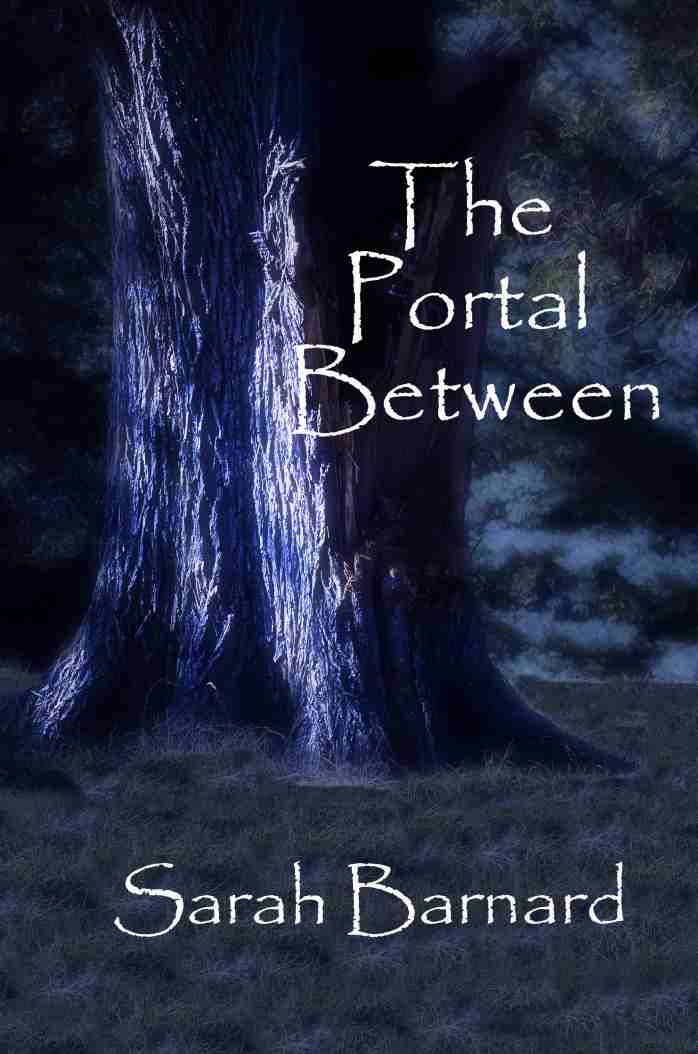
We're happy to announce on a new collaboration with author Sarah Barnard to green up her three books: The Map and The Stone, The Portal Between and The Portal Sundered.

Sara Barnard is offering readers who wish to buy her book on Ethics Trading's Books page and on her own website for The Portal Series a way to make your book buying a little bit more Green. There is now the option on these webpages to add a Tree Sticker to your order and in return our "One tree planted for this book" sticker will be added into your book order and a tree will be planted on your behalf, for that book as well.

Here's a a brief summary of each of Sarah Barnard's Books:.

The Map and The Stone
released Aug 1st 2010
Rhys is 10 years old and he has a problem. There's a Darkling on his bed and it needs his help. In a race against the withering effects of the space between worlds, Rhys must find the magical Nexus and help the Darkling and his people find their way home before it's too late.


The Portal Between
Sam has been missing for 2 years and no-one knows what happened. Kate always hoped and believed that Sam was alive. Now, in a flurry of magic and chaos, Sam is back - but she's being chased and needs to turn and face her demons.


The Portal Sundered
Having discovered some of who she really is, Sam tries to rule the world beyond the Portals. But it's all going wrong and she faces trouble on all sides, even while she sleeps and Lily can't, or won't, help her this time.

You can also find Sarah Barnard on Facebook and follow her on Twitter.

For more information on authors and publishers that green up their books with Eco-Libris check our authors/publishers page.

Yours,
Raz @ Eco-Libris


Eco-Libris: Promoting sustainable reading!