Monday, August 2, 2010

Doom and gloom for independent bookstores? Not in New York!

Last Thursday we were all doom and gloom about Independent stores and called them to prepare a war plan. Well, it looks like there's at least one place where the sun shines over independent bookstores. It's called New York.

Yes, in the Big Apple, one of the meccas of independent bookstores, things seem to work much better for indie bookstores according to New York Magazine. In a special feature about New York City indie bookstores, entitled "Indie Bookstores Rising" New York Magazine is presenting what they call "an indie-bookstore renaissance," with new bookstores like Fort Greene’s Greenlight Bookstore (see photo above), Williamsburg’s Book Thug Nation, Dyker Heights’s Boulevard Books, and Mast on the Lower East Side, among others

What makes NY different from all other places? New York Magazine explains:

"Contributing to the resurgence is the local-is-better ethos, which has bled over from the culinary and fashion worlds, causing readers to crave a more human-scale shopping experience. And the specter of a world without indie bookshops has inspired a new, perhaps quixotic generation of entrepreneurs to jump in. The new booksellers bring a modern approach to the business: In place of the dusty riots of yore are more curated, well-lit shops that emphasize personal service and community—book clubs, readings, charity projects, and even the occasional lit-geek basketball league."

So what we see here is a blend of readers with local preference and stores that provides unique added value to their customers. Combine these elements with strong communities and a large market of readers and you've got a success story called New York.

Can it work in other cities as well? I wish I could say Yes for sure, but it seems to me that the Big Apple is a unique place and in other places indie bookstores will have to work very hard to create such an indie-bookstore renaissance.

Here are some of the interesting pieces you can find on this interesting feature:

Book-o-nomics: Maybe the most interesting part, as it reveals how much money a bookshop makes. In this case it's Greenlight Bookstore that shows how it turns an average monthly profit of $11,706.27. Kudos to Greenlight Bookstore for their radical transparency!

Cover to Cover - The new (and renewed) guard of independent bookstores in the city.

Where the Pros Go - New York authors’ favorite indies. Colum McCann, for example, can't pick just one: “If I had to choose from Housing Works, the Corner Bookstore, Crawford Doyle, Three Lives, 192 Books, or the Strand, I’d pick them all. I’d smash them together and give all the books a chance to flirt in a new neighborhood.”

Bound for Your Bedstand - Booksellers recommend their most eagerly anticipated titles. For example, David Franklin of Strand Book Store (our partner!) Pick is: Salman Rushdie, Luka and the Fire of Life (Nov. 16). “All of Rushdie’s work has an aspect of fantasy—this one goes a little further.”

Got Any Buddhist Police Procedurals? - In a city of enthusiasts, there’s a bookshop for every taste.

Seller’s Market - What used bookstores (and eBay customers) will fork over for three previously loved titles.

Yours,
Raz @ Eco-Libris
Eco-Libris: Promoting   sustainable reading!

Sunday, August 1, 2010

Eco-Libris is on the first issue of AZGreen Magazine

AZGreen Magazine, Arizona’s premier lifestyle publication devoted to sustainability was published for the first time last month. Not only that this is a very interesting sustainable lifestyle magazine, but it also mentions Eco-Libris!

Yes, if you look at page 71 and you'll see the famous Eco-Libris guy reading a book in the forest! And don't forget to check out the rest of this beautiful magazine that is available online - you'll find there plenty of interesting articles on many green issues - many on lifestyle, from green luxury to green realtors, but there are also articles on ecology, composting, nature, etc.
Here is some more information on the new magazine from its website:

At the heart of AZGreen Magazine’s mission: Inspiration, Awareness and Stewardship. Firmly grounded in the belief that a sustainable lifestyle is achievable by anyone and should be accessible to everyone, AZGreen Magazine endeavors to build awareness and inspire lifestyle choices that are more than just “going green” — that become a state of mind, a way of existing, that promise to improve life on many levels for ourselves and our communities. We have a unique opportunity to be a conduit for understanding and hold fast to the belief that building awareness is the key to affecting positive change on every level.

As the green movement gains steam, the need for reliable information is growing. AZGreen Magazine is dedicated to providing insightful, reliable information that enables readers to make informed choices about sustainability on every level. We go beyond the “how to” and “should do” angles, and explore sustainability on a deeper level, then share our insight to communicate the “why” behind choices that affect our families, our communities and our world.

The first issue of AZGreen Magazine is available at http://www.azgreenmagazine-digital.com/azgreenmagazine

Yours,

Raz @ Eco-Libris
Eco-Libris: Promoting   sustainable reading!

Saturday, July 31, 2010

Five places where it is better to use a Kindle than a book (pool not included)

Amazon cut last Thursday the cost of the Kindle to $139. On the New York Times article about the $139 “Kindle Wi-Fi", Jeff Bezos was quoted saying:

“At $139, if you’re going to read by the pool, some people might spend more than that on a swimsuit and sunglasses."

I went today to the pool and didn't see there with a Kindle, but on the other hand saw many people reading physical books. It makes sense - if your book gets wet, it's unpleasant but it will get dry eventually. I'm not sure you can say that about the Kindle if it gets wet..

So, it got me thinking - which are the places it's better to have a Kindle (or iPad or Nook) with you and not just good old physical books? I came up with 5 places:

1. Vacation - books are heavy, what can we say. So with all airlines that will happily charge you for overweight baggage, taking the Kindle is no brainer. More room for some clothes and of course for gifts! And we shouldn't forget that a lighter flight has a smaller carbon footprint :)

2. Picnic - Somehow I got a feeling that when a chorizo falls on your Kindle, with all the ketchup and mustard in the world, it will be easier to clean it than a book and it also won't smell like a chorizo for the next couple of weeks. Also, people don't really know what you're reading, so there's a better chance you won't be disturbed with questions like: "Ah, The Girl With the Dragon Tattoo, that's an interesting name - what is it about?"

3. Party - Who brings a book to a party anyway? But if you got yourself to a boring party and you can't run away, the Kindle can be your saver, helping you to pass the time in a meaningful way without showing too much your lack of interest in the party. If caught, you can always say you were just checking your email.

4. Subway/Bus - At least if you're one of those who don't like others to know what they're reading. Another condition is that you're not one of those who fall asleep on the subway/bus and drop whatever they hold on the floor..

5. Restroom - Some people might disagree, but isn't it time to throw all the books and magazines stacked in your little restroom and just have some quiet reading time with your Kindle? Just make sure to keep the experience as hygienic as possible!

If you have any other places to add to the list please feel free to add your comment!

Yours,
Raz @ Eco-Libris
Eco-Libris: Promoting   sustainable reading!

Friday, July 30, 2010

Green Business Blog Carnival #8


Welcome to week #8 of the Green Business Blog Carnival, a weekly green assembly that highlights the news, opinion, and insight on green business published during the past week.

We're very happy to host the carnival this week and thank all our green biz colleagues who arrived to celebrate with us another week of green biz progress. So let's check who's here.


The first guest is
Dinesh Thirupuvanam of Viv Business Club who followed up an interesting on a LinkedIn group called the Compost Network about plastic food packaging. He's exploring the question whether plastic food packaging is getting in the way of the recycling and composting efforts of many of our small businesses, and adding three recommendations to prevent this from happening and to help businesses move toward zero waste.

Speaking of materials,
Kalen Smith of Engineer-a-Business wrote about the potential of potato starch based polymers. One of the problems associated with the depletion of the world's oil supply is that the polymers we use in our world come from this ever disappearing substance. Fortunately, we can already use the starches from potatoes to create new polymers for someconsumer applications. But is it possible to use these polymers for more later on as well?

Kalen is not the only guest occupied with green innovation.
Jeff McIntire-Strasburg at Sustainablog who is talking with Eco-entrepreneur and runner Carolina Baker, who couldn't find an eco-friendly sports bra that she liked... so she created her own.

Green marketing was also on the agenda of the green community this week.
Lorna Li of GreenMarketing.TV wrote on the importance of adopting green marketing practices, with five actionable ways you can green your marketing campaigns today. Lorna's first advice is to have your product or service eco certified.

Taylen Peterson at CalFinder
agrees with her. Going Green with Your Business? Certify! he says in an article that explored green certifications and eco-labels, explaining that the competitive edge of the future will go to certified green businesses.

We celebrated the beginning of season 4 of Mad Men on
Eco-Libris blog, wondering if anything changed since Don Draper tried to sell us Lucky Strike, explaining that advertising is about selling happiness and assuring us that whatever we're doing is OK. We conclude that not much, at least not when it comes to ads of e-readers.

And no carnival is complete without some radical thinking - RP Siegel presented at Triple Pundit a great video presenting Seventh Generation’s Jeffrey Hollender idea about radical transparency. In this video, he tells the story of how several years ago, he posted a list on the company’s website of all the things wrong with their products and how they fell short of what the company was, and still is, trying to achieve in terms of their focus, which is to “restore the environment, inspire conscious consumption and create a just and equitable world.”
We hope you enjoyed this week's carnival and we invite you to visit the green business blog carnival
next week at Matter Network.
Also, if you want to host the carnival on your blog check out the opportunities at Sustainablog and to submit posts visit Triple Pundit for the submission form.

Yours,
Raz @ Eco-Libris

Eco-Libris: Promoting sustainable reading!

Thursday, July 29, 2010

Independent bookstores need a war plan and they need it now!

The news in the last 48 hours on the closing of two independent bookstores, Tree House Books (Holland, MI) and Rodney's Bookstore (Cambridge, MA) got me to realize it's time for independent bookstores to prepare a war plan.

There's nothing new in the fact that independent booksellers are struggling, and not only in the US.
The Guardian reported in February that in the U.K. independent bookshops closed at a rate of almost two every week over in 2009. In Vancouver, Canada, After 53 years in the business, independent bookstore Duthie Books closed its doors last January and in April another bookstore in the city, Sophia Books, was closed.

So why War Plan? Because it doesn't seem like this trend is going to
reverse itself any time soon. And if independent bookstores want to stop this trend, they have to act fast and they need a war plan, because this is a war and their survival is at stake.

Couple of elements that are crucial for the success of this plan:


1.
Awareness - Independent bookstores have many loyal customers, but probably not enough. At the same time, I'm sure there are plenty of readers out there that will be happy to consider supporting them because they like these bookstores, what they represent and their contribution to the local economy and community.

2.
Personal Benefit - To move people from condition of awareness to action you need to provide them with some sort of added value or personal benefit. This is a must. You can't just rely on the fact that people like bookstores - they won't show up in big numbers if it won't be worthwhile.

3.
No trade-offs - Most people don't like to pay a price even it's for something they believe in. For example, a survey conducted by researchers at Stanford University found that 76 percent favored government limiting business’s emissions of greenhouse gases. At the same time, large majorities opposed taxes on electricity (78 percent) and gasoline (72 percent) to reduce consumption. So my conclusion is that if you want to drive people to do the right thing, you need to create a win-win strategy with no trade-offs. Staying only with the small minority who don't mind these trade-offs is not an option anymore. How do you integrate these elements into an effective yet realistic war plan? Well, that's the real challenge here.

Couple of weeks ago I suggested here a model
that will provide customers with both personal benefits and the feeling that they're contributing to the prosperity of their own community. This model is based on creating a collaboration with other local businesses to enable these businesses to provide customers with discounts for each other. I think that if you add to it a creative awareness campaign, this model can definitely be considered to be part of the war plan.

In any case there's a need to act fast. "Publishing is changing fast, bookselling is changing fast" said Skip Prichard, Ingram CEO last week at BookExpo America in a 'A CEO Panel: The Value of a Book'. He is certainly right and I believe there's a real urgency here - the sooner independent bookstores will prepare their war plan, the better their chances are to win this war.

You can find more resources on the future of bookstores on our website at www.ecolibris.net/bookstores_future.asp

Yours,
Raz @ Eco-Libris

Eco-Libris: Promoting sustainable reading!


Wednesday, July 28, 2010

We have a winner on our giveaway of "The Complete Idiot's Guide to Beekeeping"

We have a winner on our giveaway of the " The Complete Idiot's Guide to Beekeeping"!

Following our review of "
The Complete Idiot's Guide to Beekeeping" by Dean Stiglitz and Laurie Herboldsheimer, we asked you to share with us if you would consider beekeeping.

We got interesting replies and we have a winner! Our winner is nfmgirl who wrote:


Absolutely I'd consider it! I actually know a beekeeper who has a small honey business. I live in South Florida surrounded by orange groves and bee hives!

Congrats nfmgirl! You won a copy of "
The Complete Idiot's Guide to Beekeeping" and we'll also plant a tree for this book! Thank you also for all the rest of the participants!

Yours,

Raz @ Eco-Libris

Eco-Libris: Promoting sustainable reading

Tuesday, July 27, 2010

10 Ways Geolocation is Changing the World

This post was written by Rob Reed. He is the founder of MomentFeed, a location-based marketing, strategy, and technology firm.

Location technologies are transforming how we experience, navigate, and ultimately better our world. From the global to the local, here are #10Ways geolocation is a positive force for good.
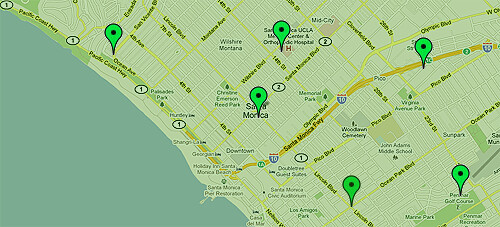


Social media has changed the world. It has revolutionized communications on a global scale, and the transformation continues with every status update, blog post, and video stream. The global citizenry has become a global network.

Since becoming widely adopted just a couple years ago, social media has supercharged social action, cause marketing, and social entrepreneurship. Indeed, the true value hasn't been the technology itself but how we've used it. Today, a second wave of innovation is defining a new era and setting the stage for change over the coming decade.

Mobile technologies will extend the global online network to anyone with a mobile device while enabling countless local networks to form in the real world. We've decentralized media production and distribution. We're doing the same for energy. And we'll continue this trend for social networking, social action, and commerce.

The combined forces of smartphones, mobile broadband, and location-aware applications will connect us in more meaningful ways to the people, organizations, events, information, and companies that matter most to us---namely, those within a physical proximity of where we live and where we are. Can location-based services (LBS) change the world? Here are #10Ways:

1. Checking in for Good: If Gowalla and Foursquare have taught us anything, it's that people respond to simple incentives. By offering badges, mayorships, and other intangible rewards, millions of people are checking in to the places they go. Apps like Whrrl take this a step further and enable like-minded "societies" to form on a local basis. The next step is for these apps to add greater purpose by encouraging more meaningful checkins and offering corresponding badges and stamps, thus mapping the cause universe. Or for a dedicated app to be developed that rewards conscious consumption, social responsibility, and civic engagement. Yes, the CauseWorld app features a cause element, but it's not about cause-worthy places.

2. Eating Locally: Sustainability demands that we source our food as close to its point of production as possible. Many so-called locavores subscribe to the 100-mile diet, which requires that one "eat nothing---or almost nothing---but sustenance drawn from within 100 miles of their home." Given the difficulty of accessing and verifying this information in order to live by this standard, there's a geo-powered Locavore app. It gives you info on in-season foods, those coming in-season, farmer's markets, and links to recipes. This rather simple app is clearly just the start. In time, location-aware apps will guide us not only to the grocery store or farmer's market but through them. All the while identifying foods based on our particular diet or sensibility.
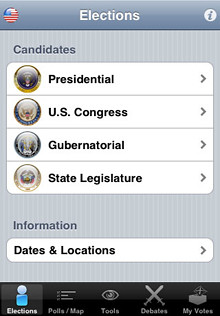
3. Political Organizing: In the next presidential election, politics will not only be local but location-enabled. We saw the power of social media in Obama's 2008 landslide victory. In 2012, location-based apps and technologies will play a central role in how campaigns are organized, managed, and ultimately won. Much of this will be visible through mobile apps and location-aware browsers. Activists and volunteers will be more empowered. Voters will be more engaged in the moment, right down to casting their votes. Behind the scenes, though, we'll see massive new sets of data available to campaigns for targeting, empowerment, and optimization. The party, candidate, and/or cause that has the best handle on geolocation will have a measurable advantage. (The Elections app will soon be updated for 2010.)
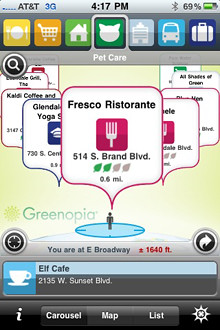
4. Finding Green Businesses: The web has effectively replaced the paper Yellow Pages as a way to find local businesses and services. However, this "stationary web" experience is quickly being supplanted by the mobile web and mobile applications, which give us access to this information when we most need it. The Yelp and Around Me apps are popular ways to find restaurants, coffee shops, or hotels wherever you are, but what about green-rated businesses? Greenopia has transformed its printed, local guides into a dynamic, nationwide mobile application that lets you find local, green-rated businesses in any category. No more paper and a much better experience. The Green Map app is another that facilitates discovery and connects us to local green environments.
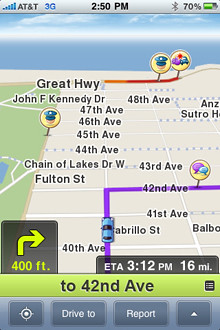
5. Traveling More Efficiently: We've had access to GPS navigation systems and static traffic information for some time, but only now are we seeing the full potential of these technologies. With access to more detailed traffic information that is specific to your route and updated in real time, we can minimize congestion and maximize traffic flow (as much as physically possible). The new turn-by-turn MapQuest 4 Mobile app is a good start, as you can get traffic alerts specific to the route you program. However, user-generated information from apps like Trapster and Waze can crowdsource more specific details, such as whether to avoid an intersection due to a toxic chemical spill. Or, if you want to avoid automobiles altogether, Google Maps makes it easy to use public transportation and take a bike.
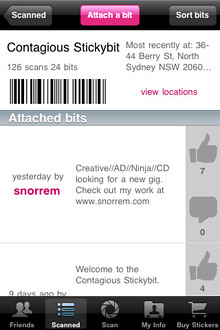
6. Scanning for Ethical Products: With online shopping, we've become accustomed to reading reviews and making comparisons before we buy. This can now be done in the physical world through games like MyTown and services like Stikybits. By scanning a product barcode using a smartphone camera, you can unlock a treasure of additional information (not to mention deals) that can help with your purchase. This might include where it was produced, how far it traveled, the reputation of the manufacturer, chemical contents, carbon footprint, or the full lifecycle analysis. Location-aware applications can also transform commerce itself by giving us better access to local inventories and locally-produced goods. Whether it's fruits and vegetables or books and electronics, if something can be found within blocks of your current location, it makes no sense to ship it from afar.
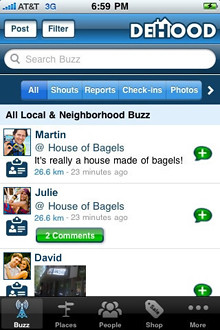
7. Networking Neighborhoods: One of the hottest categories in geolocation is neighborhood networking. The vision for many of these apps is to strengthen the very fabric of our communities. With DeHood, you can keep track of what's happening in your neighborhood, share your favorite places, and grease the wheels for actually meeting people. After all, if you've made contact through the app, it's a lot easier to say "Hello" in the real world. Blasterous is another that lets you share information locally, whereas BlockChalk does this on an anonymous basis. Finally, NeighborGoods uses your street address to facilitate one-to-one borrowing and trading of useful stuff. In the end, making connections with your neighbors can lead to safer, more productive, and more sustainable communities.
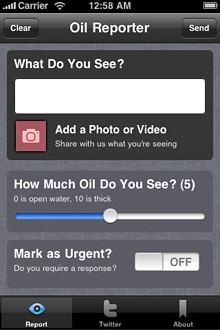
8. Tracking Environmental Disasters: The size and scope of environmental disasters appears to be growing. In 2008, we had the Tennessee coal ash spill, which was billed as "the largest environmental disaster of its kind in the United States." And that was before we realized it was three times bigger than originally estimated. More recently, the BP oil spill set daily records for "largest environmental disaster in the U.S. ever." In each case, geolocation technologies can be used by engaged citizens to monitor and track the effects. They can be used by response teams to coordinate containment and cleanup efforts. Ultimately, these technologies can be used to accurately measure the size and impact of a disaster in order to better understand its damages and costs.

9. Viewing the World Through an Eco Lens: Augmented reality (AR) follows geolocation as one of the hot trends in mobile technology. It enables you to view the world through a smartphone camera (or similar device) and see layers of geo-specific content or information. One of the most popular apps is Layar, an augmented reality browser/platform that lets you choose specific data layers or experiences. The potential for green- and cause-related content is tremendous. You might view green-rated businesses, LEED-certified buildings, or virtual GHG emissions as they enter the atmosphere. Combined with smart meter technology, you could see the most efficient and inefficient homes around you in real time. And for the cynics among us, you could view our mountains, forests, rivers, and oceans as they once were...before the effects of climate change and so many environmental disasters.
10. Capturing the Moment: Better access to information about what's happening around us---right now---can dramatically improve quality of life. This sense of "geospatial awareness" is possible through today's smartphones, whereby a piece of content or information---a moment---is captured and preserved based on the unique time and place in which it occurred. It is essentially to document spacetime. Protests, natural disasters, sporting events, parties, political crises...real-time information about anything happening anywhere at any time, as well as the history of what happened. This will take several years and a number of different applications to realize. In the end, though, it will revolutionize how we access and consume content. It will complete the democratization and decentralization of news and information...based on time and location.

Cautionary note: Privacy is the single biggest issue in the LBS industry. It's important to understand what information you are sharing with regard to your location and with whom.

Author's note: We'll be hosting geolocation events for Social Media Week in Los Angeles this September. This is the third in Max Gladwell's #10Ways series of distributed blog posts. It was published simultaneously on as many as 300 blogs.