Monday, January 24, 2011

The future of Independent bookstores (or: 5 comments on 'Small Bookstores Struggle for Niche in Shifting Times')

Julie Bosman wrote an interesting article (Small Bookstores Struggle for Niche in Shifting Times) on today's New York Times, on the search of Independent bookstores for the right ways to secure their future in times when even a giant bookseller like Borders finds it difficult.

The article was following the American Booksellers Association’s Sixth Annual Winter Institute last week, which was an opportunity for indie booksellers to "to learn, network, and just have fun". According to Bosman more than 500 independent booksellers debated their next step in this event.

The future of bookstores and especially independent bookstores (whose stores, according to the article, account for about 10% of the industry’s retail market overall) is one of the issues we're following and addressing for a long time, as we believe this would have an important influence on how the book industry will look like in the future.

Here are five thoughts on the issues brought up in the article (each comment starts with the relates quote from the article):


1. "At a workshop on Thursday, dozens of booksellers debated the finer points of alternative business models, like the addition of a cafe. Is it worth the trouble, one person asked? How do you figure out how much to charge for scones and lattes? And even if nonbook business attracts attention, how much profit will follow?“At a certain point, I begin to feel like we don’t need more P.R.,” said Roxanne Coady, the president and founder of R.J. Julia in Madison, Conn. “We need sales.”" - Roxanne Coady is right. Sales is the bottom line, but to get there indie bookstores need to provide customers with value. Value is what will eventually get customers back to stores and generate sales. Once this value was based on service and the sense of community. Apparently today this is not enough and there's need in ingredients to the 'value' indies provide.

Can coffee or vine sales be that ingredient? They can definitely help to strengthen the sense of community or be sort of a 'foot in the door' to get customers in the store, but then bookstores will have to start specialize in wine or coffee, which may not be easy at all. I'm not saying bookstores shouldn't sell more products other than books, but from a specialization point of view my estimate is that bookstores might do even better if they collaborate with the local wine or coffee shops, offering then coupons with special discounts on books for example, for their customers, and on vine/coffee for the bookstores' customers.

My feeling is that without a monetary incentive, the store's value won't be valuable enough for customers no matter what products they store will add.

2. "One challenge for booksellers, they said, was finding the balance between selling their core product without overwhelming it with the presence of coffee, baked goods, gifts and other merchandise." - True. I believe that some of the stores that will choose to focus on coffee, baked good, gifts and other merchandise will eventually find that they do well with these products and will become a coffee shop or a gift shop that also offers some books instead of a bookstore that offers coffee or some gifts.

3. "Naftali Rottenstreich, an owner of Red Fox Books in Glens Falls, N.Y., said it would be difficult to get customers to think of independents as places to buy books online.“The mindset right now is, that’s Amazon or that’s BarnesandNoble.com,” he said. “There’s a transformation that has to take place, and I think it will happen in time.”" - He's right. The problem is that even if this mindset will change then there's a small chance this platform will bring new customers to the stores. Online sales in their current settings won't help brick and mortar sales as it doesn't provide customers with any incentive to go to the stores and buy there books and therefore doesn't help the bookstores' owners in figuring out how to transform the stores back to an asset.

4. "“We know now that in the world of physical bookselling, bigness is no longer viewed as an asset,” said Mitchell Kaplan, owner of Books & Books, which has independent stores in South Florida, Westhampton Beach and the Cayman Islands. “It’s about selection and service and ambiance."" - I would rate them in this order: Ambiance, service, selection. Atmosphere is maybe the most important thing - if you go to a bookstore where the service is great, but the atmosphere is not very welcoming or you're feeling like you're in a book warehouse, or it's just not fun to be there, most chances are you won't come back. On the other hand, if you go to bookstores like Greenlight Bookstore in Brooklyn, where you feel at home the minute you walk in, there's a pretty good chance you'll come again no matter what.

Service is also very important part of the value proposition of the store and shouldn't be ignored. When it comes to selection, it's a tough call because as an indie bookstore you will never be able to compete with Borders or B&N, not to mention Amazon, so maybe it should be about meeting a minimum level of selection to maximize the chance customers will actually find books they look for.

5. “We have to figure out how we stay in the game,” said Beth Puffer, the director of the Bank Street Bookstore in Manhattan. “You have to rethink your whole business model, because the old ways really aren’t going to cut it anymore.”" - I couldn't say it better myself. Finding the right strategy, focusing on the way to revive sales in the brick and mortar business, is key for success. Any bookstore that doesn't make it its first priority will be left behind and eventually go out of business, and it's true not just for independent bookstores, but also for the big chains like Barnes & Noble and Borders.

More related articles:

We love Greenlight Books but think they might be wrong about the future of independent bookstores

5 reasons why independent bookstores shouldn't count too much on Google Editions

Is there a future for Barnes & Noble and Borders bookstores? Is it a green one?

Can monetary incentives + local benefits generate a brighter future for independent bookstores?

You can find more resources on the future of bookstores on our website at www.ecolibris.net/bookstores_future.asp

Yours,
Raz @ Eco-Libris


Eco-Libris: Promoting sustainable reading!

Sunday, January 23, 2011

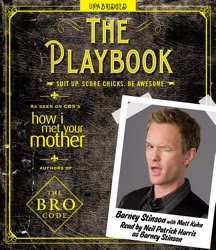
We have a winner in the giveaway of Barney Stinson and Matt Kuhn's audiobook 'The Playbook'

We had a giveaway of Barney Stinson and Matt Kuhn's audiobook 'The Playbook' following the review of this funny audiobook. We asked you to share with us the best way become a ladies’ man just like Barney Stinson and we have a winner!

The winner is Cassie who wrote: "Hmm...I'd say be every girl's best guy friend, and be too confident!"
Congrats Cassie! You won a copy of the audiobook 'The Playbook'! This prize is courtesy of of the publisher, Simon & Simon audio. Thanks also to all the other participants. Please keep checking our green reviews and giveaways.

Yours,
Raz @ Eco-Libris

Eco-Libris: Promoting sustainable reading!

Friday, January 21, 2011

The Other Side of Apple (and not the one you're gonna like..)

This is the title of a report released yesterday by the Institute of Environmental and Public Affairs (IPE), an independent Beijing-based non-profit organization. In the report, Apple is accused of "ignoring hazardous and unhealthy conditions at the factories in China where its components are assembled."

The report is not just about Apple. It outlines findings from a group of 36 non-governmental organizations into environmental and health practices among technology companies that are operating in China. Out of the 29 global technology companies that were ranked, Apple was ranked last.

Apple was not the only company the report cited as failing to act or respond to environmental and social concerns - Nokia, LG, SingTel, Sony, and Ericsson also fared poorly in the survey. But the groups said Apple was the worst, for "dodging" questions from the public and requests from environmental groups for investigations.

This was a bit of a surprise for the authors. “We originally thought that Apple, as a corporate citizen, would take a leadership role, but now we feel they ended up as the most obstructive,” Ma Jun, director of the Institute of Environmental and Public Affairs said in a phone interview to the San Francisco Chronicle.

Examples? Here's one: "among the examples cited in the report is Wintek Corp. which in 2009 is alleged to have used poisonous chemicals in the production of screens for Apple [touch screens for the iPhone and iPad] that resulted in workers being hospitalized for nerve damage. In a regulatory filing in May, Wintek said it stopped using the chemical, N-Hexane, and all workers were getting adequate treatment. Apple has not acknowledged Wintek as a supplier, Ma said."

And what does Apple say in response? “Apple has had an extensive supplier auditing program since 2006 and we have lots of information available through our website,” said Jill Tan, a Hong Kong-based spokeswoman for Apple.

The issues Apple has with its suppliers as well as its limited willingness at best to address them are not new to those who followed the wave of worker suicides last year at Foxconn, Apple's primary China supplier, last year. Again and again we see that although Apple seems to be generally transparent and progressive in their approach to social responsibility (see Apple's Supplier Responsibility Report), they are not willing to answer tough questions and be fully transparent when it comes to criticism on their operations.

My guestimation is that it is connected to Apple's (and Steve Job's) general lack of willingness to acknowledge that they might do something that is not perfect or god forbidden wrong, no matter what the issue is. This sort of hubris is definitely not the culture you would expect from an innovative and creative company like Apple.

And if you think Apple should be excused because all the companies behave this way - think again. BT and HP, for example, ranked highly in IPE’s list of technology companies because they have responded to environmental problems and worked with suppliers to ensure better compliance, according to Ma.

You can learn more about the report from this video published by IPE:


More articles on this issue:

Is the iPad manufactured at a modern sweatshop?
Can the iPad be "green" if it is manufactured in a sweatshop?

Yours,
Raz @ Eco-Libris

Eco-Libris: Promoting Sustainable Reading!

Thursday, January 20, 2011

Where readers buy their ebooks? Week 7 of our 10-week e-book purchasing survey

We're on week 7 of our 10-week ebook experiment. Like all experiments, it began with a question: Where will readers look to buy their ebooks? Following the launch of Google eBookstore, its collaboration with independent bookstores and with Amazon, B&N, Borders and other bookstores fighting on their market share, the competition between ebook retailers is getting fierce.

Our assumption is that many readers will look for e-books using a search engine and will buy from one of the first results of their search. So we randomly chose 10 books of
the New York Times’ 100 Notable Books of 2010 and googled each title with the word ebook and wrote down the first two results we got. We redo it every Thursday for 10 weeks and will see if there are any changes in the search results.

Here are the results for week 7.
In brackets you'll see the last week's results. If they were the same we just wrote 'same'. And if you click on the titles, you will be forwarded to the first place on the title's search):


1.
Girl by the Road at Night by David Rabe
1st place: Simon & Schuster
(same)
2nd place: Simon & Schuster (same)


2.
The Long Song by Andrea Levy
1st place: Amazon.com
(same)
2nd place: Amazon.com (same)


3. The New Yorker Stories by Ann Beattie
1st place: Amazon.com
(same)
2nd place: Amazon.com (
Simon & Schuster)

4.
A Visit from the Goon Squad by Jennifer Egan
1st place:
Powell's Books (Amazon)
2nd place: Amazon.com (Powell's Books)

5.
Big Girls Don't Cry by Rebecca Traister
1st place: Simon & Schuster (same)

2nd place: Barnes & Noble (
Simon & Schuster)

6. The Price of Altruism by Oren Harman
1st place: Kobo
(same)
2nd place: Amazon.com (same)


7. INSECTOPEDIA by Hugh Raffles
1st place: Amazon.com (same)

2nd place: Amazon.com (same)


8.
Country Driving by Peter Hessler
1st place: Goodreads
(same)
2nd place:Barnes & Noble (same)

9.
The Warmth of Other Suns by Isabel Wilkerson
1st place: Random House (same)

2nd place: eBooks.com (
eBookMall)

10.
Hitch 22 by Christopher Hitchens
1st place: Amazon.com
(same)
2nd place: Atheist Movies (Barnes & Noble)


Here's the summary of the results:


Amazon B&N Publishers Others

1st 2nd 1st 2nd 1st 2nd 1st 2nd
week 1 6 3 1 2 3 4 0 1
week2 6 4 1 3 3 3 0 0
week3 6 2 1 2 3 4 0 2
week4 6 3 2 1 2 4 0 2
week5 5 4 1 2 2 3 2 1
week6 5 3 0 2 3 3 2 2
week7 4 5 0 2 3 1 3 2

We give 2 points for 1st place and 1 point for 2nd plac
e:


Amazon
B&N
Google
Publishers
Others
week 1
15
4
0
10
1
week 2
16
5
0
9
0
week 3
14
4
0
10
2
week 4
15
5
0
8
2
week 5
14
4
0
7
5
week 6
13
2
0
9
6
week 7
13
2
0
7
8

S
o what do have here? Amazon is still performing well in the first place, but the real news is the growing power of the 'Others' segment, which is now the second one after Amazon with 8 points. You can find under 'Others' bookstores (Powell's Books), online bookstores (eBooks.com), dedicated e-reader bookstores like Kobo and the occasional blog (Atheist Movies this time).

Conclusions? We're still 3 weeks far from ending our experiment, but the growing presence of smaller players may suggest that only few weeks but it looks like the competition is getting stronger, which means that when we talk about books that are not brand new, even if they're bestsellers, than it's getting easier to small players to take larger pieces of the pie on the account of the bigger players, especially from the big chains - B&N and Borders, which looks like they're getting weaker and weaker. Anyway, it's certainly getting more interesting!
See you next Thursday.

You can find all the survey results so far at www.ecolibris.net/buying_ebooks.asp

Yours,
Raz @ Eco-Libris

Eco-Libris: Promoting sustainable reading!

Wednesday, January 19, 2011

The green book of the week - The Sustainable MBA: The Manager’s Guide to Green Business

The first thought I had in mind when I read "The Sustainable MBA: The Manager’s Guide to Green Business" by Giselle Weybrecht was that I wish this book would have been published 10 years ago when I was an MBA student. Since that can't happen, I can only wish every current MBA student, from those in Harvard to those taking MBA classes online, will get to read it and learn valuable lessons about green business.

As an adjunct professor in the University of Delaware's Alfred Lerner College of Business and Economics, teaching MBA and undergraduate students sustainability and green business, I find this book a great resource to both young and old graduates who are looking to better understand how to integrate sustainability in their organization.Link

This is not just a useful book, but also one that makes you think about the basics of sustainability and how much it makes sense for business in so many levels, creating opportunities, increasing revenues and decreasing costs and risks. If you need a mirror to how unsustainable the current business world is and a guide showing you how exactly you can change it, no matter what area you're operating in, this is your book.

We wanted to learn more about the book and asked the author, Giselle Weybrecht, for an interview. You can read it just after the details on the book and the author.

About the book:

The Sustainable MBA: The Manager’s Guide to Green Business provides the knowledge and tools to help you “green” your job and organization, to turn sustainability talk into action for the benefit of your bottom line and society as a whole.

The Sustainable MBA is organized like a business school course – allowing you easy access to the relevant information you need about sustainability and Accounting, Economics, Entrepreneurship, Ethics, Finance, Marketing, Organizational Behaviour, Operations and Strategy.

Based on more than 100 interviews with experts in business, international organizations, NGOs and universities from around the world, this first of its kind guide brings together all the pieces of the business and sustainability puzzle including;

    ❑ The basics on what sustainability is, why you should be interested, how to get started, and what a sustainable organization looks like.
    ❑ A wide range of tools, guidelines, techniques and concepts that you can use to implement sustainability practices.
    ❑ Tools and tips on how to “green” your job, including how to sell these ideas to your team, how to make green choices as a consumer and how to organize green meetings.
    ❑ A survey of the exciting trends in sustainable business happening around the world.
    ❑ A wealth of links to interesting resources for more information.
To see a full Table of Contents and a sample chapter click here

About the author:

Giselle Weybrecht is the author of ‘The Sustainable MBA: The Manager’s Guide to Green Business’ published by Wiley in 2010 (www.thesustainablemba.com). The book aims to educate the next generation of business leaders about sustainability issues, whether these be students or business executives. Prior to this she worked for many years with the United Nations internationally in sustainable development including with the UN World Water Assessment Programme at UNESCO. She has also worked with government, NGOs, business and with social entrepreneurs around the world in sustainability.

Giselle holds an undergraduate degree from Queens’ University in Canada in political science and development studies and an MBA from London Business School and is a graduate of the Beahrs Environmental Leadership Programme at University of California Berkeley. Today she writes, speaks and does consulting relating to embedding sustainability into business schools and businesses internationally and developing engagement and training programs to ensure that students and employees know what sustainability is all about and how they can be part of making their businesses more sustainable.

And now to the interview with Giselle:


Hello Giselle. What difference do you see between the time when you were MBA student and today when it comes to embedding sustainability in business schools?

My answer to this question really depends on the day you ask it. Some days I feel that things are completely different for these new classes of MBA students. They have access to a greater number of electives, courses, clubs, speaker series, and conferences, all focused on topics related to sustainability. I regularly speak with faculty and deans who are really committed to these issues and embedding them into the curriculum.

There is definitely a growing interest in business schools about these issues. However, there are other days, when I take a closer look at some of these initiatives or speak with the students taking part in these events, that I realize that the majority of MBA students are still graduating with very little knowledge about what sustainability means to business, why it is important and how to implement it. The embedding part is taking a lot longer than I would have liked.

Do you think business schools are moving forward faster or slower than the business world itself when it comes to sustainability?

Business schools are moving much slower than the business world. There are many companies that are really pushing the boundaries when it comes to sustainability. They are exploring what it means to their core business, their customers and their employees. Business schools are increasingly talking about it but few are really taking a serious look at it in the way that businesses are.

Of all the topics you describe in the book (finance, operations, marketing, etc.) - where do you think we see the most progress?

There is a lot of progress being made in all of the areas described in the book, and there is an increasing number of individuals and organizations working on each of the topics covered. Most companies start with the more straightforward subjects; marketing, operations, strategy. Fewer companies have been looking at topics such as accounting, finance and even organizational behavior, but this is changing rapidly.

When I read your book, the business case of sustainability seems very clear - so how come we don't see more companies that adopt these practices? Is it lack of vision, leadership, policy incentives or there's just not enough interest on the consumers side?

As outlined in the book there are several reasons why businesses move forward in this area. The details of exactly why and how vary depending on the business, the industry, the location. It is up to managers and employees to think strategically about what this has to do with their business, their customers, and their employees in particular. Many managers still think sustainability is a feel good topic, that it is about doing the right thing that it is something you can switch on and off. In reality, sustainability is a complex topic and requires a real commitment.

What would you suggest to managers who want to better understand what sustainability is all about and how they can use it at work? Where should they start (or what's the second step after buying your book)?

Regardless of what your job is there are ways for you to start exploring these issues, and potentially make a real impact through your work. In the book there is a chapter called Getting Started to help employees and managers move forward in this area as well as many tips and tools to get you started. I recommend starting with the book to get a good grasp of the issues and what is happening in this area. Then spend a bit of time looking into what is happening both in your business and in your industry with sustainability. Pick the topics that you feel most affect your business or the job that you do and move forward from there.

What would you recommend to students who are looking for an MBA program? How should they take into account the 'green' factor? Should they prefer programs that focus mainly on green issues (like the programs at Presidio Graduate School)?

For students who decide to do an MBA my suggestion is to make sure you get the strongest business education you can. In order to bring sustainability into business and to make a difference in this area, graduates need to have a sound knowledge of business. During the MBA, there are countless ways to learn about sustainability. Look at schools that provide a good balance of the two.

Do you find yourself more or less optimistic today comparing to what you felt when you started working on this book?

I'm a very optimistic person, although I often get frustrated at how slowly progress happens. I have received an incredible response to the book and what the book is trying to do, by businesses, academics and individuals. Things are picking up in this area, it is very exciting.

What are you currently working on? Any new book on the horizon?

I have a lot of new projects happening at the moment, which include a new book, developing innovative workshops for business and university on sustainability, speaking and strategic consulting work. Keep an eye on my website (www.thesustainablemba.com) for more details about these!

Thank you, Giselle! To learn more about the book visit www.thesustainablemba.com. Last but not least, the book is printed on FSC-certified paper. You can buy it on Amazon (it's also available as an ebook).

Yours,

Raz @ Eco-Libris

Eco-Libris: Working to green up the publishing industry!

Monday, January 17, 2011

Reminder: We giveaway a copy of the audiobook 'The Playbook', narrated by Neil Patrick Harris

You can still win a copy of Barney Stinson and Matt Kuhn's audiobook 'The Playbook'. As we wrote here last Wednesday we're giving away a copy of this audiobook, courtesy of the publisher, Simon & Simon audio.

How you can win? Very simple. All you have to do is to add a comment to Wednesday's post with your tip on the best way become a ladies’ man just like Barney Stinson. We will have a raffle on Wednesday, January 19, 5:00PM EST between all the readers that will leave a comment by then. The winner will be announced the following day.

Yours,
Raz @ Eco-Libris

Eco-Libris: Promoting sustainable reading!

Friday, January 14, 2011

The Book Saver offers a new way to digitize your library (if you have the time and patience)

Ion Audio is releasing the Book Saver, an e-reader conversion system for printed materials. According to the company, it's the "fastest and most convenient system for transferring novels, textbooks and periodicals to the digital realm."

As you can see in the video below, Book Saver has two cameras that take separate images in rapid succession of each page within an open book. Book Saver works very fast - it takes only one second per two pages according to the company, which means that to copy a 200-page book will take you about 15 minutes.

The Book Saver, which will be offered in a price of $149, is indeed a great way to digitize your library, but will readers have the time and energy to really use it, when they can digitize almost any book in their library by purchasing and downloading it in no effort and no time?

Let's take for example a beloved book on my shelf - Catch 22 by Joseph Heller. It has 464 pages, which means that using the Book Saver it will take me about 35 minutes to digitize the whole book, if I won't get tired and keep doing it at the same pace. On the other hand, I can go to Amazon Kindle store, pay $12.99 (for some reason the e-book cost more than the paperback..) and have it on my Kindle in one minute. In this case, I would say I would go for the second option and maybe spend an half hour reading it instead of storing it.

What would you do? Do you see yourself using the Book Saver or you rather just digitize your library by downloading it? We'll be happy to hear your thoughts.


Yours,
Raz @ Eco-Libris

Eco-Libris: Promoting sustainable reading!