Tuesday, August 10, 2010

Great visual comparison on Newsweek between e-books and books (and a little correction)

Newsweek published yesterday this interesting visual comparison between e-books and books (as part of another great article by Malcolm Jones):


You can see it in full size by clicking here.


They even referred to the carbon emissions of e-readers vs. physical books and quoted a break-even point of 40-50 books. I believe they used this figure is taken from Goleman and Norris' life cycle analysis, and it is much higher from the break even point we found when we looked into it, which is 17.4 books.

Also, if I'm right and their figure is based on Goleman and Norris' work, then I think there's a little mistake here - according to Goleman and Norris "when it comes to global warming, though, it’s 100 books". The figure of 40-50 books mentioned in their analysis with regards to "fossil fuels, water use and mineral consumption." The analysis of Goleman and Norris is available at http://www.nytimes.com/interactive/2010/04/04/opinion/04opchart.html

As I mentioned, our figure is 17.4 books and is based on the following calculations (you can read more about it on our analysis of the iPad's environmental report):

For this comparison, I'll use the figure of 7.46 kg of CO2 to represent the lifecycle carbon emissions of an average book. This figure was presented on the Cleantech report (The Environmental Impact of Amazon's Kindle) and according to the report based on three independent studies that used life cycle analysis calculators to assess the impact of raw materials (I know it's much higher from the figure of 4.01 kg presented on the 2007 'Environmental Trends and Climate Impacts: Findings from the U.S. Book Industry' report, but I believe it helps to make the comparison more balanced).

Now, according to Apple's lifecycle emissions of an iPad (Wifi and 3G model), its carbon footprint is 130kg CO2e. So, comparing between the two gives us the following equation: 1 iPad = 17.4 physical books.

In any case, we definitely agree with the bottom line of Goleman and Norris that is also quoted here - walking to the library is still the most eco-friendly way to read.

Yours,
Raz @ Eco-Libris

Eco-Libris: Promoting Sustainable Reading!

Monday, August 9, 2010

How to go green without going green - the move of Dorchester Publishing to eBook / POD model


Publishers Weekly reported last Friday that "Mass market romance publisher
Dorchester Publishing has dropped its traditional print publishing business in favor of an e-book/print-on-demand model ".

The reason? Sales fell 25% last year. According to
the Wall Street Journal, the decline is in part because of "declining orders from some of its key retail accounts, including Wal-Mart Stores Inc." This is a very interesting step that has not only business consequences , but also green ones.

By eliminating the traditional print model, it actually leaves the returns model, which is a wasteful system that generates incredibly high return rate (estimates are between 25%-40%) of books that are produced but not sold.


And of course e-books have their own potential to generate savings in carbon emissions - as I wrote here and in other places in the past, I don't think we're there yet, but we're getting closer and closer to the day where e-books will represent a greener option for the majority of readers.


So Dorchester Publishing are going green without actually announcing on going green. I think that it's good they focus on the business advantages of their move, but if they already do something that will decrease their footprint, they might want to think how to use it for their benefit, starting with acknowledging readers on the environmental consequences of their move all the way to branding themselves as a green publisher.


This move generates both opportunities and risks, and here we summed up couple of them:


Opportunities
:
1. Regaining profitability by stopping the decline in sales and significantly reducing costs.

2. Offering authors better royalties and attracting more authors who will be interested in working under the new model.

3. Working with Independent bookstores that the company wasn't able to work with in the past.

4. Positioning itself as a green publisher, with continuing steps to increase efficiency and reduce carbon footprint at the same time.

Risks
:
1. Authors might won't be satisfied with the offered new model and leave the publisher.
WSJ reported that Hard Case Crime, an imprint owned by closely held Winterfall LLC, said it may seek to move its mystery books from Dorchester to another publishing house.
2. Supply problems with the transfer to the new POD model.

3. The e-book segment the publisher is relying on will stop showing “remarkable growth”.

4. Margins might improve, but the move to a e-books/ POD might not be worthwhile from a benefit-cost standpoint, with sales continuing to sharply decline, especially given that the sales force was let go and that the number of titles released monthly will be reduced from over 30 to 25.


Dorchester Publishing's President John Prebich explained to Publishers Weekly that “these are like pioneer times in publishing. We felt like we needed to take some chances and make a bold move."

I'm sure he's not the last publisher we'll see taking such steps and I'm sure many publishers will follow up with Dorchester Publishing to see if it actually works for them. We'll do it as well and keep you posted not only on their business success, but also how they will approach the green impact of their move - will they embrace their new green advantages and use them for their own good or continue to go green without mentioning it?


Yours,
Raz @ Eco-Libris


Eco-Libris: Promoting sustainable reading!

Sunday, August 8, 2010

Author Sarah Barnard is going green with Eco-Libris!

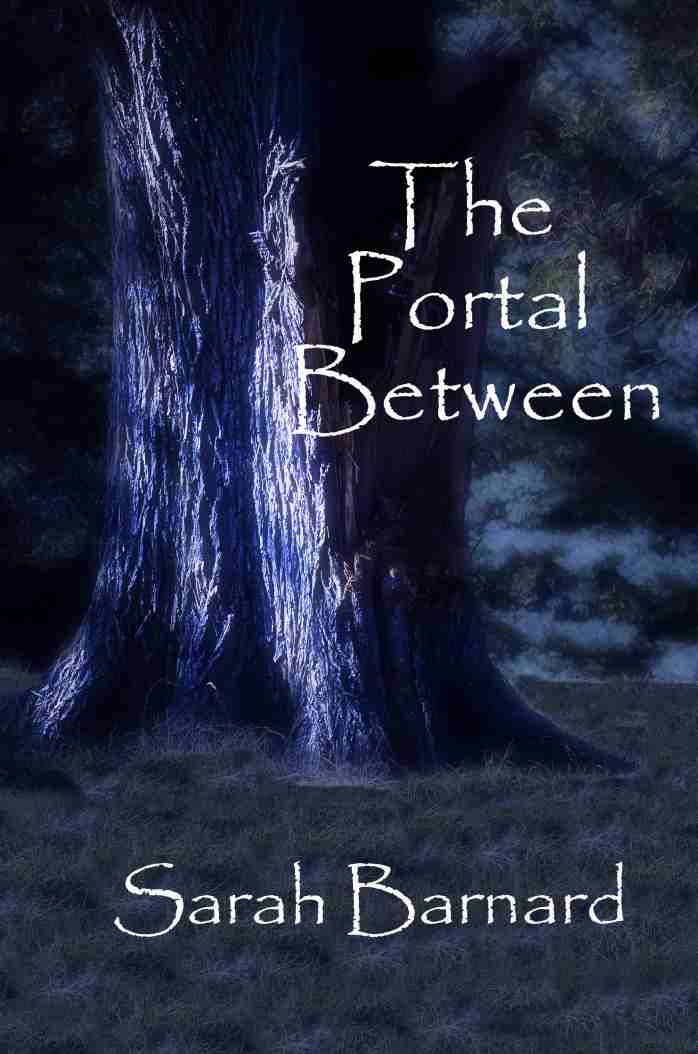
We're happy to announce on a new collaboration with author Sarah Barnard to green up her three books: The Map and The Stone, The Portal Between and The Portal Sundered.

Sara Barnard is offering readers who wish to buy her book on Ethics Trading's Books page and on her own website for The Portal Series a way to make your book buying a little bit more Green. There is now the option on these webpages to add a Tree Sticker to your order and in return our "One tree planted for this book" sticker will be added into your book order and a tree will be planted on your behalf, for that book as well.

Here's a a brief summary of each of Sarah Barnard's Books:.

The Map and The Stone
released Aug 1st 2010
Rhys is 10 years old and he has a problem. There's a Darkling on his bed and it needs his help. In a race against the withering effects of the space between worlds, Rhys must find the magical Nexus and help the Darkling and his people find their way home before it's too late.


The Portal Between
Sam has been missing for 2 years and no-one knows what happened. Kate always hoped and believed that Sam was alive. Now, in a flurry of magic and chaos, Sam is back - but she's being chased and needs to turn and face her demons.


The Portal Sundered
Having discovered some of who she really is, Sam tries to rule the world beyond the Portals. But it's all going wrong and she faces trouble on all sides, even while she sleeps and Lily can't, or won't, help her this time.

You can also find Sarah Barnard on Facebook and follow her on Twitter.

For more information on authors and publishers that green up their books with Eco-Libris check our authors/publishers page.

Yours,
Raz @ Eco-Libris


Eco-Libris: Promoting sustainable reading!

Friday, August 6, 2010

Is E-Reading Really Greener?

This question is at the center of an article I wrote, which was just published this month on the Independent Book Publishers Association's (IBPA) monthly journal, the Independent.

Here's the first paragraph from the article:

The emergence of e-book readers, starting with the release of Amazon’s Kindle in November 2007 and through the launch of Apple’s iPad in April 2010, is changing the book industry. No doubt about that. But is it also making reading more sustainable? Is it really greener to abandon the good old print-on-paper book for a cool gadget that holds hundreds of books without causing back strain?

So, is E-Reading Really Greener? You're welcome to read the rest of the article here and find out!

A press release of the IBPA on the article can be found here - http://www.booktrade.info/index.php/showarticle/28546

If you look for more resources on e-books vs. physical books, check our ebooks page at http://www.ecolibris.net/ebooks.asp

Yours,
Raz @ Eco-Libris


Eco-Libris: Promoting sustainable reading!

Wednesday, August 4, 2010

What's the problem of Barnes & Noble? Can new owners solve it?

The New York Times reported this morning that Barnes & Noble announced that its board was putting the company up for sale. In other words: B&N, the world's largest bookseller, is struggling.

This announcement follows a dive of the company's stock since April, when it was priced around $24 (yesterday the trade was closed at $12.84), as well as its last report on June that showed a fall of 4.8% in store sales in fiscal year 2010 compared to the previous year.

Barnes and Noble is still very financially stable, although it's worthwhile to mention the decline in its cash as can be seen on its balance sheet from $361 million in 2008 to $61 million in 2010. Nevertheless, B&N is struggling to find its competitive edge in a business that like the NYT explained "has increasingly shifted to online retailers and e-book sales, leaving both chains and independent sellers struggling."

The main problem of B&N is its 720 brick and mortar stores. In a market where physical books were almost 100% of the market and online sales were relatively marginal, they were a huge advantage. Now, when the market is changing and some experts, like Mike Shatzkin, estimate that brick-and-mortar decline from 72% of the market today to 25% in 5 years, these stores become a liability.

B&N still didn't present any clear strategy to deal with this change. It's true it has taken some steps like dedicating more in-store real estate to its Nook by creating Nook Boutiques, but that's not enough. And it's far from being a clear strategy.

B&N is in a unique position, competing with companies that has no brick and mortar store like Amazon or Apple (Apple stores don't really count) or big-box stores like Costco, Wal-Mart and Target that aren't based on book selling. This situation is both a major risk and opportunity, but it demands leadership and vision. No matter who the new (or old, if it will be Chairman Leonard Riggio or the billionaire investor Ronald W. Burkle that already own a stake in the company) owners will be - if they won't deal with this question, B&N will continue to struggle and its battles will become harder and harder to fight.

Last but not least, here's what we think should become of of B&N brick and mortar bookstores to help them become again an asset for the company - http://ecolibris.blogspot.com/2010/05/is-there-future-for-barnes-noble-and.html

More articles on the future of bookstores can be found at http://www.ecolibris.net/bookstores_future.asp

Yours,
Raz @ Eco-Libris


Eco-Libris: Promoting sustainable reading!

Monday, August 2, 2010

Doom and gloom for independent bookstores? Not in New York!

Last Thursday we were all doom and gloom about Independent stores and called them to prepare a war plan. Well, it looks like there's at least one place where the sun shines over independent bookstores. It's called New York.

Yes, in the Big Apple, one of the meccas of independent bookstores, things seem to work much better for indie bookstores according to New York Magazine. In a special feature about New York City indie bookstores, entitled "Indie Bookstores Rising" New York Magazine is presenting what they call "an indie-bookstore renaissance," with new bookstores like Fort Greene’s Greenlight Bookstore (see photo above), Williamsburg’s Book Thug Nation, Dyker Heights’s Boulevard Books, and Mast on the Lower East Side, among others

What makes NY different from all other places? New York Magazine explains:

"Contributing to the resurgence is the local-is-better ethos, which has bled over from the culinary and fashion worlds, causing readers to crave a more human-scale shopping experience. And the specter of a world without indie bookshops has inspired a new, perhaps quixotic generation of entrepreneurs to jump in. The new booksellers bring a modern approach to the business: In place of the dusty riots of yore are more curated, well-lit shops that emphasize personal service and community—book clubs, readings, charity projects, and even the occasional lit-geek basketball league."

So what we see here is a blend of readers with local preference and stores that provides unique added value to their customers. Combine these elements with strong communities and a large market of readers and you've got a success story called New York.

Can it work in other cities as well? I wish I could say Yes for sure, but it seems to me that the Big Apple is a unique place and in other places indie bookstores will have to work very hard to create such an indie-bookstore renaissance.

Here are some of the interesting pieces you can find on this interesting feature:

Book-o-nomics: Maybe the most interesting part, as it reveals how much money a bookshop makes. In this case it's Greenlight Bookstore that shows how it turns an average monthly profit of $11,706.27. Kudos to Greenlight Bookstore for their radical transparency!

Cover to Cover - The new (and renewed) guard of independent bookstores in the city.

Where the Pros Go - New York authors’ favorite indies. Colum McCann, for example, can't pick just one: “If I had to choose from Housing Works, the Corner Bookstore, Crawford Doyle, Three Lives, 192 Books, or the Strand, I’d pick them all. I’d smash them together and give all the books a chance to flirt in a new neighborhood.”

Bound for Your Bedstand - Booksellers recommend their most eagerly anticipated titles. For example, David Franklin of Strand Book Store (our partner!) Pick is: Salman Rushdie, Luka and the Fire of Life (Nov. 16). “All of Rushdie’s work has an aspect of fantasy—this one goes a little further.”

Got Any Buddhist Police Procedurals? - In a city of enthusiasts, there’s a bookshop for every taste.

Seller’s Market - What used bookstores (and eBay customers) will fork over for three previously loved titles.

Yours,
Raz @ Eco-Libris
Eco-Libris: Promoting   sustainable reading!

Sunday, August 1, 2010

Eco-Libris is on the first issue of AZGreen Magazine

AZGreen Magazine, Arizona’s premier lifestyle publication devoted to sustainability was published for the first time last month. Not only that this is a very interesting sustainable lifestyle magazine, but it also mentions Eco-Libris!

Yes, if you look at page 71 and you'll see the famous Eco-Libris guy reading a book in the forest! And don't forget to check out the rest of this beautiful magazine that is available online - you'll find there plenty of interesting articles on many green issues - many on lifestyle, from green luxury to green realtors, but there are also articles on ecology, composting, nature, etc.
Here is some more information on the new magazine from its website:

At the heart of AZGreen Magazine’s mission: Inspiration, Awareness and Stewardship. Firmly grounded in the belief that a sustainable lifestyle is achievable by anyone and should be accessible to everyone, AZGreen Magazine endeavors to build awareness and inspire lifestyle choices that are more than just “going green” — that become a state of mind, a way of existing, that promise to improve life on many levels for ourselves and our communities. We have a unique opportunity to be a conduit for understanding and hold fast to the belief that building awareness is the key to affecting positive change on every level.

As the green movement gains steam, the need for reliable information is growing. AZGreen Magazine is dedicated to providing insightful, reliable information that enables readers to make informed choices about sustainability on every level. We go beyond the “how to” and “should do” angles, and explore sustainability on a deeper level, then share our insight to communicate the “why” behind choices that affect our families, our communities and our world.

The first issue of AZGreen Magazine is available at http://www.azgreenmagazine-digital.com/azgreenmagazine

Yours,

Raz @ Eco-Libris
Eco-Libris: Promoting   sustainable reading!