Showing posts with label green options. Show all posts

Thursday, April 23, 2009

Green Options - STATE OF THE WORLD Book Series Pivotal to Understanding our Paths to Sustainability

As part of Eco-Libris' ongoing content partnership with Green Options Media, we feature a post that was originally published by John Ivanko on April 22 on Sustainablog. Today's post is about a book that can change your life and the good part is that you get a new version of it published every year.

People often ask me: “So what set you on your present course of operating a sustainable business, growing most of your own food organically, working from home, and powering your entire farm and business with renewable energy?” People ask me about that definitive moment where it became obvious that I needed to live and work a different way, a better way that didn’t involve never-ending growth, consumption, and earn-and-spend.

There was no such moment, or crisis, that transformed my life of power suits, lattes, or gotta-have-it-all-now mindset. Instead, my sustainable journey (which very much continues to this day as an evolving journey) resulted from a growing understanding about the issues facing the planet and its inhabitants, both through personal experience and by learning of these changes from other organizations or individuals.

One such organization that serves as a compass for my endeavors is the Worldwatch Institute, a nonprofit organization that produces the authoritative State of the World book series as well as numerous other books and resources to build an ecologically sustainable society that meets human needs. Each year, a new State of the World book is not only jam-packed with interdisciplinary research and analysis that a non-scientific mind (like mine) could comprehend, but organized in such a way to make it both practical and powerful for anyone searching for ways to express a vision for how to live on a planet without destroying it or exploiting its inhabitants.

Each year, the State of the World book series focuses on a particular theme which might address energy, community, food and agriculture, population, health, trade policies and natural resource use, just to name a few. For 2008, their State of the World: Innovations for a Sustainable Economy provides both a timely analysis of how our “free trade” global economy has gone astray and insights into the powerful movements afoot, including localization, a triple bottom line approach to business, microfinance, and the low-carbon economy.

“In response to the grim realities of climate change, resource depletion, collapsing ecosystems, economic vulnerability, and other converging crisis of the twenty-first century, a consensus is emerging among scientists, governments, and civil society about the need for a rapid but manageable transition to an economic system where progress is measured by improvements in well-being rather than by expansion of the scale and scope of market economic activity,” writes John Talberth in his chapter "A New Bottom Line for Progress." I only can hope that a copy of State of the World 2008 is on President Obama’s desk since it’s unlikely that Americans can consume our way out of the present financial crisis. Even if we did, Talberth argues that such consumption will not likely lead to furthering our happiness, but rather to further degradation of the planet.

State of the World is one of those books that helped me change course and better comprehend what is happening to the planet. State of the World 1992 -- which I read in preparation for my self-imposed sabbatical and exit from corporate America -- served as my launch pad for discovering what was happening to the planet and what I could do about it. Life is not a spectator sport for those who want to champion change. The State of the World books provide the global insights from leading thinkers, academics, professionals and analysts who dive into the social, environmental and governmental aspects of how our world functions, revealing ways in which we could, once again, thrive more sustainably.

The State of the World books are not End of the World books; they’re revealing and sobering at times, but they provide numerous pathways to achieve greater sustainability within our culture, society, economy and community.

Not surprisingly, their latest release, State of the World 2009: Into a Warming World, is devoted to the technological and institutional developments most likely to help humanity weather the storm of global warming. Most scientists agree that we have only a few years to reverse the rise in greenhouse gas emissions and help avoid abrupt and catastrophic climate change. As the world governmental leaders come together to negotiate a new climate agreement in Copenhagen in December 2009, State of the World: Into a Warming World can guide our understanding of how a warming planet threatens everyone and everything on Earth -- and what we could do about it.

“A sustainable world is not an impoverished world but one that is prosperous in different ways,” writes Tim Jackson in the chapter “The challenges of Sustainable Lifestyles” from the 2008 State of the World. “The challenge for the twenty-first century is to create that world.”

So, how are you creating that sustainable world?

At Inn Serendipity, my family and I are creating it with renewable energy, local food, and living below our means.

Thursday, March 26, 2009

Green Options - Turn Envelopes Into Gift Bags

As part of Eco-Libris' ongoing content partnership with Green Options Media, we feature a post that was originally published by Jackie Hernandez on March 24 on Crafting a Green World. Today's post gives some great ideas for a creative ideas what to do with the extra envelopes we have at home.


Whenever you buy a greeting card it comes with an envelope, whether you intend to mail the card or not. If you are not mailing the card, then the envelope is really just a waste of paper. Instead of needlessly stuffing the card into an envelope just give the recipient the card and use the envelope to make a “baglet” for a lovely gift. Rather than buying a new card at all, consider a makeover for a plain notecard and a used or found envelope to make a gift bag.

Envelope Gift BagsJessica Jones, from How About Orange, shares this wonderful tutorial for turning envelopes into gift bags, which she cutely nicknames “baglets”. The tutorial includes a printable template for a To/From label and tips for decorative touches like a scalloped edge or adding a ribbon handle.

For other great eco-gift wrapping ideas try using comic strips or these tips from Danny Seo.

[Images by Jessica Jones for How About Orange]

Friday, March 20, 2009

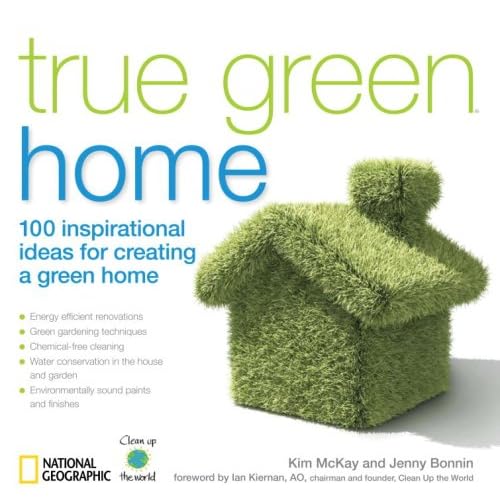
Green Options - Book Review: True Green Home by Kim McKay and Jenny Bonnin

As part of Eco-Libris' ongoing content partnership with Green Options Media, we feature a post that was originally published by Justin Van Kleeck on March 9 on Sustainablog. Today's post is a review of a new green book that will help making your home a green home.

Living a low-impact, eco-friendly life often boils down to simplicity and sheer common sense. Just follow the old proverb “Reduce, Reuse, Recycle,” and you will be a long way towards minimizing your impact on the environment.

But sometimes consuming less and acting with a green heart still leaves much in the “gray area” of wastefulness and pollution. To help make your life at home as green as can be, Kim McKay and Jenny Bonnin compile 100 great eco-tips in True Green Home. Part of the National Geographic True Green series, True Green Home serves as an accessible introduction to the countless areas of your home that can be either eco-friends or eco-foes.

It is also a great “cheat sheet,” as the authors call it, by combining comprehensiveness with brevity and generality.1 That is, you get a lot of quick glimpses into where your home (or apartment) might be wasting resources and some basic steps you can take to reduce your environmental footprint. (Nearly every page has more space devoted to a photo than words.)

Thursday, March 5, 2009

Green Options - Zumbox: A Viable Paper Mail Killer?

As part of Eco-Libris' ongoing content partnership with Green Options Media, we feature a post that was originally published by Jeff McIntire-Strasburg on February 27 on Sustainablog. Today's post is about a new creative online service called Zumbox.

zumbox mail view
What are the environmental costs of “snail mail?” That’s easy, right: paper-based mail has a massive footprint when one takes into account the harvesting of trees, the production of paper, and the disposal of much of what we receive in our mail boxes.

What’s the answer? Electronic mail… right?


Well... maybe. If you have someone's email address, or can easily find it, email as currently configured does provide a viable alternative. But, ever tried to email everyone on your block? If you're a marketer, ever tried to simply email everyone on your snail mail list? For the most part, unless you've taken steps to gather those email addresses, you can't complete these tasks: email addresses have no immediate connection to a physical address.

Enter Zumbox, a start-up based in the Los Angeles area. Their solution to the paper-email dilemma: create an electronic mailbox for every physical mailing address in the United States.

Friday, January 16, 2009

Green Options - Eight Ways to Green Your Library


As part of Eco-Libris' ongoing content partnership with Green Options Media, we feature a post that was originally published by Tina Casey on January 14 on Eco Child's Play. Today's post gives you few ideas how to green a very special place: your local library.

Library use is surging upwards, as the economy surges downwards. More people are saving money by sharing community-owned books, computers, and other resources. That’s certainly the green way to go, but what about the libraries themselves? How green is your local library?

While some new libraries are LEED-certified, your library might be old, inefficient, and in need of expensive retrofits that it can’t afford. Let’s read on to see how you can help your local library go green, no matter what kind of building it’s in.

1. Your Library: Go Early and Often.
First things first: if you’re a new parent and you haven’t taken your child to the library yet, do it. Don’t be shy about bringing an infant or crawler. For a while now, the trend has been to include more stuffed animals and other attractions for people who prefer crawling around to reading a book. If an eruption seems immanent you can always cut the visit short.

Green Tip: As your child grows out of kid-sized play tables, easels or seating cushions, ask if you can donate them to your local library.

2. Green Your Trip to the Library.
Is your library near mass transit? If it is, include a bus or train ride in your library routine. Pack some healthy snacks and a couple of commuter-friendly activities in case things bog down. Car-pooling with another family, walking, or biking are other green travel options.

3. Bring a Book, Leave a Book at Your Library.
Does your library have a book freecycling rack, or a used book sale room? If not, suggest one. It gives every library patron in the community a convenient place to recycle their used books, without making an extra trip to donate them at another location.

4. Toy Lending at Your Library.
Does your library lend toys? Toy lending libraries are another popular trend, and another great way to share and reuse community resources.

5. Help Your Library Green Up.
Does your library recycle? Does it use green cleaning supplies? If your library seems a little behind the curve, ask about volunteering to help them introduce some simple, basic office greening into their operations.

If you have time to help your library develop an in-depth greening program, the American Library Association has many resources to get you get started.

6. Green the Air Around Your Library.
Do cars tend to idle on the library grounds? Ask about setting up and publicizing a no-idling policy.

7. Green the Grounds Around Your Library.
Does your library have a rain garden? Could it use some strategically located shade trees? See if you can partner up with a local landscaper or nursery to help your library transform a resource-guzzling lawn into an educational greenscape.

8. Green the Movies at Your Library
Does your library show films? Ask if they’ll screen a green documentary. The list of entertaining docs on green topics is growing. Supersize Me and Kilowatt Ours are two that come to mind.

Friends: Does your local library have an interesting or unusual way to go green? Let me know, and I’ll share the info in a future post.

Image: Public domain via indiamos at flickr.com under creative commons.

Thursday, December 11, 2008

Green Options - What a Love Story Can Teach Us about Sustainability: Queenelle Minet’s “In Memory of Central Park”

As part of Eco-Libris' ongoing content partnership with Green Options Media, we feature a post that was originally published by Jeff McIntire-Strasburg on December 4 on Sustainablog. Today's post includes a review of "In Memory of Central Park: 1853-2022" by Queenelle Minet.

Despite having agreed to review Queenelle Minet's In Memory of Central Park: 1853 - 2022, I really wasn't that excited about reading it. Described as "a thought-provoking work combining insight into the mind of a therapist, a poignant love story, and a commentary on both right-wing politics and our troubled environment" in press materials accompanying the book, I thought "Oh, no -- fiction with an agenda. That almost never works."

I was wrong.

In Memory of Central Park follows in the tradition of the great works of dystopian fiction: Orwell's 1984 and Huxley's Brave New World. Set in New York City in 2050, the novel's protagonist and narrator Noah is a psychotherapist with plenty of issues of his own. He's in love with his brother's wife Margaret. He struggles with unresolved resentment about his relationship with his deceased father. And he, along with the other characters, live in a city that's not only seceded from the United States, but has also encapsulated itself in a huge dome in order to protect itself from terrorism and other outside threats.

As you might imagine in this environment, Noah stays pretty busy with his psychotherapy practice. Though skilled at helping other resolve some of their own emotional problems, he's distant from those around him. His eventual affair with Margaret fails because he's unwilling to allow her to leave Adam, her successful and politically-connected husband, and move in with him (Noah, like many of the residents of the city, lives in a single room). He's frustrated because, despite his best efforts, he can't seem to help a difficult patient who's obviously dying. And he just doesn't get the ideas underlying "clown show" performances by an underground street theater group that seems to pop up everywhere.

Wednesday, November 19, 2008

Green Options: 9 Ways To Eliminate Direct Mail Waste

As part of Eco-Libris' ongoing content partnership with Green Options Media, we feature a post that was originally published by Jennifer Kaplan on November 17 on Ecopreneurist. Today's post brings you some great ideas how to eliminate your direct mail waste, which is especially important this time of the year.

Are you ready for the holiday mail season? Maybe this is the year to trim your DM waste. The fundamental problem is that direct mail marketing is inherently inefficient. 44% of all direct mail is thrown in the trash without ever being opened and that which is opened only yields an average of a 2.77% response. So, if you want to get 1,000 customers to respond to your direct mail piece, you have to mail, on average, 36,101 pieces of mail. Multiply that by millions of customers and millions of companies and you can see the problem. The good news is that a March 2008 Aberdeen Group study found that direct mail waste reduction is an area where "environmental concerns and shareholder interests coincide." But, you may already know this. They also found that 40% of companies said direct mail waste reduction was one of the top two areas being focused on for improving eco-friendly business practices.

The goal is to achieve the greatest precision with the lowest number of pieces mailed, but there a lot of other benefits. You can save money and enhance customer satisfaction which will in turn improves customer loyalty, purchase behavior and profitability. Here's 9 ways:

#1: Maintain good list hygiene. Updating your mailing list to remove unwanted, duplicate and undeliverable addresses regularly and thoroughly is a cheap, quick and effective way to reduce waste. There are several ways to verify mailing lists and all outside list mangers are able to perform this function or you can buy your own address verification software. You will mail fewer pieces and, under some circumstances, lower your mailing rates. Consider offering incentives (such as the offer of a discount on their next purchase) for notification of duplicate mailings and incorrect addresses.

Thursday, November 6, 2008

Green Options - Eco-Conscious Holidays: Green Gift Giving

As part of Eco-Libris' ongoing content partnership with Green Options Media, we feature a post that was originally published by Becky Striepe on November 5 on EcoLocalizer. Today's post brings you some great ideas how to green your holidays.


[Image credit: Lizerati at Flickr used with permission]

It's that time of year! There are parties and big meals to plan, gifts to get together, and travel plans to finalize. How is a person supposed to live green during such a busy time of year? This week, we're going to take a look at ways to have a fabulous holiday season without giving up those Earth-friendly ideals. It doesn't have to feel like a sacrifice!

Wednesday, October 29, 2008

Green Options: Want to Green Your Addiction to Books? Buy Ebooks

As part of Eco-Libris' ongoing content partnership with Green Options Media, we feature a post that was originally published by Jeff McIntire-Strasburg on October 27 on Sustainablog. Today's post talks about one of our favorite topics: ebooks.

OK, I admit it: I'm a book whore (hardly a shocking confession for a former English professor). I'm most vulnerable to impulse buying in a book store. When a publishing PR rep contacts me about a book for review, I jump on it like an addict desperate for that next fix.


But, of course, I also know that book publishing takes a fairly heavy environmental toll: as our friends at EcoLibris have pointed out, "more than 30 million trees are cut down annually for virgin paper used for the production of books sold in the U.S. alone." The WorldWatch Institute notes that the average American uses over 300 kilograms (or over 660 pounds) of paper annually. And Erika Engelhaupt, in Environmental Science & Technology, observes:
Reducing paper use does more than save trees. Pulp and paper mills are also a major source of pollution. They release into the air CO2, nitrogen oxides (NOx), sulfur oxides (SOx), carbon monoxide, and particulates, which contribute to global warming, smog, acid rain, and respiratory problems. In addition, bleaching paper with chlorine can produce dioxin, which is known to cause cancer. Paper mills also produce large amounts of solid waste and require a lot of water. The industry is trying to clean up, but anyone who's driven past a paper mill has smelled the challenge.

Yep, that book addiction has quite the footprint. There are numerous approaches to dealing with this impact: "cradle to cradle" book design, Ecolibris-style offsets, used of recycled and non-toxic materials, and, of course, ebooks.

Wednesday, October 1, 2008

Green Options: Six Cookbooks For A Better-Eating Kitchen

As part of Eco-Libris' ongoing content partnership with Green Options Media, we feature a post that was originally published by Kelli Best-Oliver on September 23 on Eat.Drink.Better. Today's post includes recommendations on great cookbooks for everyone - vegan, vegetarian and even carnivores.

Word on the street is that as the economy worsens, cookbook sales rise. Isn’t that American? Wouldn’t one think that cookbook check-outs at the library might go up instead? Perhaps it has. Chosen method of procurement aside, I’m not begrudging you the investment in a superior culinary tome–I spent too much time looking at one yesterday, although I was able to walk away without a purchase. But I also already have a good library of cookbooks at my disposal that I’ve picked up over the years that allow me to cook great meals, from whole foods, in my own kitchen. If you’re a fledgling home cook, or just someone looking to eat at home more to save a little money, here’s a list of comprehensive cookbooks, vegan, vegetarian, and meat-eater, that have proved themselves to me time and time again.

1. Mark Bittman’s How to Cook Everything or How to Cook Everything Vegetarian. Bittman champions the idea that anyone can cook and cook well, and these volumes are infamous for their ability to empower people to do so. Both of these must-haves contain over 1,500 recipes that build a basic repertoire of skills and dishes. If you can master Bittman (and he thinks you can!) you can easily move on to more difficult recipes.

2. Vegan With A Vengeance or Veganomicon. If you keep an animal-free kitchen, or are just looking for delicious vegan meals to prepare on occasion, these books by Isa Chandra Moskowitz (the latter co-authored by Terry Hope Romero) are a great start to cooking really, really tasty food that makes you forget about meat. The ladies behind Post Punk Kitchen focus on what you can eat, not what you’re missing, and the results are fantastic. They make vegan accessable and tasty.

3. Deborah Madison’s Vegetarian Cooking for Everyone. Deborah Madison knows how to write clear and simple directions for really, really good food. I thumbed through VCfE this morning to find a tasty soup recipe (I went with summer tomato with shallot, by the way). The book is beautiful, packed full of tips, tricks, and skills, and will leave you knowing how to manipulate vegetables into any kind of dish you could want. She’s also my go-to for classic baking recipes, because of baking’s precise nature and her ability to write clear directions, I feel less inclined towards disaster.

4. Simply In Season. By Mary Beth Lind and Cathleen Hockman-Wert, this cookbook my mom picked up for me in Door County is organized by season, you’re always cooking with what’s fresh and available. With plenty of meatfree dishes (and suggestions for modification for meat-based ones), this is good for most kitchens. The reason why I love it the most is that Lind and Hockman-Wert don’t make me dread that stretch of winter where fresh, local produce is few and far between. We can still eat well and try to eat local.

5. The Moosewood Series has reputation for being on the…crunchier side, but Mollie Katzen and the Moosewood Collective always put forth a variety of recipes from their restaurant that people love, and I’m no different. My favorite is Moosewood Restaurant New Classics, which I cook from all the time for quick and simple veggie classic dishes.

6. The Silver Spoon. Known as the Italian cooking bible,this book is hefty–with over 2,000 recipes organized by ingredients. This is real Italian cooking, and although sometimes information is lost in translation (seriously, read through everything first to make sure it makes sense, because there are a few glaring typos) if you love the varied cuisine of Italy (as we do in our Italian-roots household), you will love this book. For me, The Silver Spoon represents moving away from American cuisine and moving towards cooking methods of the world.

Check out other cookbook reviews on Green Options below.

Readers: What cookbook would your kitchen be incomplete without?

Related Posts

Tuesday, September 23, 2008

Green Options - Greening Print Marketing: Is Soy Really Better?


As part of Eco-Libris' ongoing content partnership with Green Options Media, we feature a post that was originally published by Heidi Tolliver-Nigro on September 17 on The Inspired Economist. Today's post is about an important question to anyone interested in green printing: is soy ink really more friendly to the environment?

Many printers these days are promoting their use of soy-based inks as a way for marketers to “green” their print marketing programs. Certainly, any vegetable-based ink—such as cottonseed, linseed, and, most commonly, soy—sounds like it ought to be more environmentally friendly than petroleum-based inks. But is this really the case?

It is true that vegetable-based inks (in this post, we’ll look at soy) have very low levels of VOCs. Many soy proponents also claim that these inks come off the paper more easily than petroleum-based inks, making the paper easier to recycle. (However, evidence on this appears to be mixed.)

While “soy ink” sounds exotic, these inks have become so refined that they are now mainstream. They are readily available for sheetfed and newspapers. Heatset inks are also said to be “soy-based,” but this is really a mischaracterization, since the fast-drying requirements of the heatset process require that “soy inks” still be made primarily of petroleum.

Do You Give Up Anything?

Do marketers give anything up by using soy?

Tuesday, September 16, 2008

Green Options - Book Review: Earth Democracy

As part of Eco-Libris' ongoing content partnership with Green Options Media, we feature a post that was originally published by Kelli Best-Oliver on September 15 on Planetsave. Today's post is about a new and important book of Vananda Shiva.

In Earth Democracy: Justice, Sustainability, and Peace, Indian physicist turned environmental activist Vandana Shiva calls for a radical shift in the values that govern democracies, decrying the role that unrestricted capitalism has played in the destruction of environments and livelihoods. By no means a new release, Shiva's book is incredibly timely as skyrocketing fuel costs jeopardize the rationality of globalization. Through explaining problems with expanding globalization and privatization of public goods and services, then illustrating examples of communities rejecting the intrusion of corporations into communities, Shiva outlines core beliefs that should result in what she deems “earth democracy”, a global community that honors and respects diverse forms of life and their respective cultures.

Tuesday, September 9, 2008

Green Options: Scientists Say Forests Are a Possible Carbon Storage Solution

As part of Eco-Libris' ongoing content partnership with Green Options Media, we feature a post that was originally published by Ariel Schwartz on September 8 on CleanTechnica. Today's post is about a new research that checked the capability of forests to store carbon.


Maybe one of the best things we can do it offset our CO2 is also one of the simplest: stop cutting down trees. In a recent issue of Bioscience, Ohio State University Professor Peter Curtis
wrote that carbon storage in Midwestern forests could offset greenhouse gas emissions from two-thirds of the nearby population. Maintaining the forests could even increase storage capacity in the future.

Curtis and his team based their calculations on measurements taken between 1999 and 2005. The measurements, which factored in climate, history, and tree type, showed that a forested region in northern Michigan could potentially store over 350,000 tons of carbon each year. That adds up to about 62 percent of the region's emissions.

Interestingly, the majority of the CO2 stored in the researchers' forested region is located in wood mass and soil organic matter. The remaining CO2 is taken in by stem wood, leaves, and debris.

Curtis' team also noticed that younger trees hold more carbon than older ones, but aging trees have younger trees underneath them waiting to rejuvenate the forest. They hope that their discovery will help persuade policymakers to leave both old and young forests be.

I doubt that we'll stop cutting down forests anytime soon, as humans are regrettably shortsighted. But storing CO2 in forests is a great natural option to potentially dangerous alternatives like
carbon capture and storage.

More Posts on Carbon Dioxide:

Tuesday, August 26, 2008

Green Options - Book Review: Serve God Save the Planet

As part of Eco-Libris' ongoing content partnership with Green Options Media, we feature a post that was originally published by Robin Shreeves on August 22 on Sustainablog. Today's post is a book review of a very interesting and unique green book.


I've read a lot of books in the past year about going, being, living, embracing... green. I haven't felt I've wasted my time reading any of them, but every so often one of them will stand out above the rest. I just finished reading J. Matthew Sleeth's book Serve God Save the Planet, and it is one of those books.

For much of the later half of the 20th century, there was a divide between American Christians and environmentalists. There were individual Christians who were involved in environmentalism, but the mainstream church in America ignored the subject. Over the past decade that has been changing, and mainstream Christians are beginning to wake up and smell the shade grown, organic coffee. Books like Sleeth's are much needed in explaining the hows and whys of it all to Christians who are trying to figure out their place in what to many of them is a new green world.

I found Sleeth's book so engaging because he's attempting to live the life that I am attempting to live, too. He and his family have considerably downshifted. They continually purge their lives of stuff, live more simply, grow their own food, and seek new ways to help the planet all while realizing that they have a responsibility to the people on the planet, too.

Early on in the book, Sleeth refutes many of the reasons he hears Christians and others using to not care for the planet - reasons from "God gave us dominion over everything." (which some use to abuse the earth instead of care for it) to "I bought my SUV because its bigger, weighs more, sits up higher, and is safer in a crash. If I'm going to be in a wreck, I want my family to be safe." to "Tree huggers worship nature. I don't want to be involved with them."

Tuesday, August 19, 2008

Green Options - Is Wal-Mart Trying to Undermine Carbon Offset Guidelines?

As part of Eco-Libris' ongoing content partnership with Green Options Media, we feature a post that was originally published by Jeff McIntire-Strasburg on August 18 on The Inspired Economist. Today's post is about an interesting debate that is going on lately about Wal-Mart and whether they do or do not try to block an effort to have clearer guidelines of carbon offsets.


Though much of my time over the past couple of weeks has been devoted to the behind-the-scenes work of bringing
The Inspired Economist into the Green Options Media blog network, I've also made sure to follow the discussion regarding Wal-Mart's comments to the FTC regarding carbon offsets and renewable energy credits. In a post titled "Wal-Mart Lobbies Against Carbon Offset Guidelines," Tony Calero at Wal-Mart Watch got this discussion started by pointing to the company's comments filed in response to an FTC request:


Herein lays the scandal: Despite the company’s “green” initiatives, Wal-Mart is actively lobbying against the clarification of offset guidelines. The company’s hypocritical stance on the issue came to light last week in a hearing of the Federal Trade Commission. The FTC is attempting to modernize the “Green Guides,” guidelines issued for corporations defining acceptable marketing claims regarding environmental products and initiatives. In response to the FTC’s solicitation of retailer comment to guide the process, Wal-Mart’s Director of Energy Regulation, Angela Beehler, expressed Wal-Mart’s firm opposition towards the clarified scope and definition of carbon offsets...

As you might imagine, other media outlets picked up on this pretty quickly: Grist, for instance, noted that Consumers Union and other groups have "been advocating for clear, specific definitions to avoid misleading green claims, " and that "the FTC's definition of carbon offsets could most affect the retailer's ultra-ambitious goal to someday run on 100 percent renewable energy -- a huge amount of which would likely have to come from offsets or renewable-energy certificates." US News and World Report's "Fresh Greens" blog asked "Is Wal-Mart being hypocritical, or are its green efforts in good faith?" Eoin O'Carroll of the Christian Science Monitor's "Bright Green Blog" not only expressed a reaction similar to my own (essentially head-scratching), but also took a step further than the rest of us: he gave Wal-Mart a call. Much of the response he received followed the typical MO of a corporate communications department: the company restated its broad sustainability goals, and offered some more specific ones related to greenhouse gas emissions and energy efficiency. It addressed offsets and renewable energy credits in the last paragraph:

Tuesday, August 12, 2008

Green Options - How to Avoid the Card and Wrap Trap

As part of Eco-Libris' ongoing content partnership with Green Options Media, we feature a post that was originally published by Delia Montgomery on August 11 on Feelgood Style. Today's post is about the growing options to make your gifts more eco-friendly.

What is a card or wrap trap? A waste of resources that eventually cost more than money! Most people spend special occasion and holiday funds on ultimate trash when they buy conventional cards, gift wrapping paper and ribbon. Such items are rarely recycled and cause an excessive landfill burden, especially during December.

Perhaps you’ve noticed gift and holiday supplies proudly claiming recycled, post-consumer, chlorine-free, or tree-free? Sounds nice, but are you confused? Most consumers are when trying to decipher it all. Frustrations peak when claims are misleading.

Tuesday, August 5, 2008

Green Options - Outstanding in the Field a Farm to Table Cookbook by Jim Denevan

As part of Eco-Libris' ongoing content partnership with Green Options Media, we feature a post that was originally published by Beth Bader on July 31 on Eat.Drink.Better. Today's post is a review of a new green cookbook of chef and artist Jim Denevan. Yummy!


If buying local is the way to lower your carbon footprint and enjoy foods at their peak, then you likely can’t get any more local than chef and artist Jim Denevan’s “farm-to-table” dinners. You see, for Denevan’s events, the table is usually just a few feet from the very crops that are being served.

Denevan’s unique concept, dubbed Ouststanding in the Field, began with a few such on the farm dinners and has expanded over the last nine years into a country-wide tour of dinners. Denevan and his team travel in a 1953 bus dubbed “Outstanding.” They follow the harvest season, hosting dinners at farms, and even in sea caves, anywhere that the best of ingredients can be sourced — just feet away from the table. The dinners feature the farmers, fisherman or local food artisans whose harvest comprises the menu, alongside the efforts of local chefs.

The dinners themselves are set up like works of art, arching tables, candles in the earth, each diner’s plate brought from home to give him or her a way to add a personal touch to the event. The events, held for one night only, then whisked away to being anew in another locale have a fleeting beauty to them, not unlike Denevan’s own sand sculptures, some of which stretch for miles, and last only hours.

Tuesday, July 29, 2008

Green Options: Want Your Family to go Green? Read Eco-Friendly Families

As part of Eco-Libris' ongoing content partnership with Green Options Media, we feature a post that was originally published by Jennifer Lace on July 24 on Eco Child's Play. Today's post is a review of a new guide for families that want to go green.

Many of our readers come to our website looking for ways to start their families down the green path to eco-friendliness. Help is on the way for these families in a complete guide for families. Eco-Friendly Families, written by Helen Coronato, is designed to "guide your family to greener living with activities that will engage and inspire...from toddlers to teens." This new guide will be released on August 5, 2008.

Eco-Friendly Families is filled with many simple tips, such as watering your houseplants with rainwater and hosting a neighborhood toy swap, as well as explains the bigger issues and how our actions affect them. By targeting families, this guide helps families raise the next generation with green values. Saving the planet is a family affair!

Tuesday, July 22, 2008

Green Options: Is It Green?

As part of Eco-Libris' ongoing content partnership with Green Options Media, we feature a post that was originally published by Jake Kulju on July 16 on EcoLocalizer. Today's post is about a great new green website that provides a unique local service.

Rather, IzzitGreen.com, the new Boston-based web site is asking that question all over the city. Regular columns, reviews and business spotlights give information about how green the places Bostonians frequent really are.

Users can search for businesses by name, or they can search neighborhoods for businesses that are on IzzitGreen's green list. One of the web site's most helpful aspects is its
"Guides" page. From pizza places to used bookstores, IzzitGreen posts information about the percentage of green businesses there are in each category, where you can find the ones that are green, and they go for the dirty details...or clean in this case.

For example, if you own a business in
Boston, chances are that IzzitGreen has found out what kind of lightbulbs you use, whether or not you recycle any of the materials your business or your employers use and will have a comment on what working conditions are like. And that's just the beginning of the list.

A lively discussion forum will soon be debuting on the site. For now, all registered users are listed under the People section with varying levels of contact information.

Tuesday, July 15, 2008

Green Options: Ecopreneurist Disgusted By Trash, Ecopreneur Takes Action

As part of Eco-Libris' ongoing content partnership with Green Options Media, we feature a post that was originally published by MC Milker on July 10 on Ecopreneuirst. Today's post is about two of my favorite green issues: green business and reusable bags.

Reusable bag entrepreneur Andy Keller has a lot to say about being well, an entrepreneur. Andy was a software guy back in 2005 when he happen to visit a landfill during a home improvement project and was shocked to discover just how many plastic bags were swirling in the wind…

…on fences, on trash heaps, with birds picking on them….


He told me that this was the moment that got him started on his entrepreneurial adventure. “Note to self,” he said, “I need to start using reusable bags.”

Of, course, back in 2005, the reusable bag trend was just starting. And, people were then, as they are now, carefully purchasing them and carelessly leaving them in the car instead of carrying them into the store with them.

So, Andy set out to create a reusable bag that was easy to carry and harder to leave in the car. ChicoBag, his growing company, manufactures light, washable and easy to carry bags in a variety of fun colors. The bags roll up into a handy carrying pouch and come with a belt or purse clip for added convenience.

So far, business is booming, but slowly… by design. When asked about advice he would give to other ecopreneurs Andy stressed slow growth was key. He also encouraged would be entrepreneurs to be passionate about their business….not to look at it purely as a business venture, but rather as a lifestyle.

Part of that passion for him is helping to rid the world of plastic bags so a key part of his business plan is the recycling program he has set up.

ChicoBag doesn’t want ANY reusable bag to be left in a dark closet or sent to a landfill.

Send us all of your tired masses of reusable bags, functional or not. We will distribute them to fixed and low income families ready to start a reusable bag habit or recycle them into new useful products.


Like many an entrepreneur, distressed by a situation, Andy set out to fix it. Well Done. Andy has a little side business going on here...producing these little Bag Monster videos. I'm going to follow up on this example of viral marketing and how it has worked for him.

Read More Posts About Ecopreneurs:

Naturally Successful: Inspiring Videos for Green Entrepreneurs

Ecopreneurs: We Must Be the Change

California Based Ecopreneur Aims to Bring Electric Cars to the Masses