Sunday, March 16, 2008

Eco-Bibles? Hallelujah!

The Earth is the Lord's and All its Fullness” (Psalm 24:1). Yep, the first book ever to be printed is sprouting some greenery with an Eco-Friendly bible by The Thomas Nelson Bible Group.


The Charles F. Stanley Life Principles Daily Bible contains recycled fiber by paper manufacturer, Domtar (exact specifications and percentages of recycled fiber were not disclosed), and is wholly Forest Stewardship Council certified.


The text of this NKJV Bible is arranged in 365 portions, each including devotional insights derived from Dr. Stanley's Life Principles Bible. The full text of the Bible is broken into daily readings so you can read the Bible in a year.


Thomas Neslon also announced that they will be making a donation with the Arbor Day Foundation for copies of The Charles F. Stanley Life Principles Daily Bible sold starting on St. Patrick’s Day (March 17th) through Arbor Day (April 25th). Their company's goals are to reduce paper usage at least 30% by 2012, and to do so by printing less copies per title and improving the way supply meets real demand. By 2012 they also aim to use 30% recycled fiber (majority being post-consumer waste) in their products.


With the Vatican recently announcing pollution to be regarded as a new sin, we can only hope to see more and more main stream religious leaders taking a stand and acting as leaders on climate change.


Eylon @ Eco-Libris
Planting Trees with Eco-Libris


Saturday, March 15, 2008

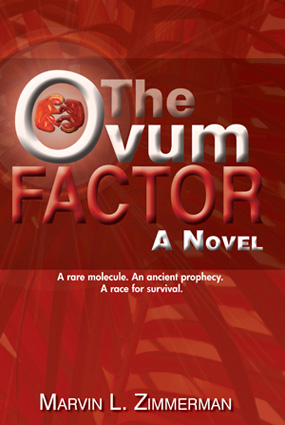
The Ovum Factor: An environmental thriller book review

The Ovum Factor begins with a hero, David Rose, a young and single investment banker, who is ready for an early midlife crisis and a big change. Then fate catches up with him, his boss sends him on a due diligence mission with an eccentric biophysicist, and he gets involved in a big story that flings him all around the globe, Indiana Jones style. The plot brings together adventure, espionage, science, investment capital, and a bit of science fiction for good measure. All to save the planet from an environmental destruction, of course.

I wrote here recently about
Earth: The Sequel, a new book that describes the current state of technological developments in the field of clean energy, and the struggle of investors and entrepreneurs to avert the same sad fate. It describes various technological developments: solar cells, wave energy, biofuels, geothermal energy and others. While The Ovum Factor's author, Marvin L. Zimmerman, does put venture capital backers as the engine behind the scenes of any plot to save the world, it is interesting to note that the technological solution he thought up is none of the above.

According to The Ovum Factor, humanity as it is does not stand a chance. What it takes is a new biological agent that will be able to accelerate the development of brain cells in a human baby during pregnancy. Such a development will create a generation of super babies, that will be able to finally make sense of our society's woes and ills, and come up with the right solutions, whatever those may be. In Zimmerman's world, like in
James Lovelock's, we're way past the tipping point, and it is going to take a whole new kind of humanity to make things right.

What I loved about the book in particular were the parts set up in the Amazon jungle. The author's love to the region and its inhabitants clearly shows, and the diversity and immensity of Brazil shines through.

Title:
The Ovum Factor
Author: Marvin L. Zimmerman
Publication Date: February 1, 2008
Pages: 383
Publisher:
Synergy Books

Yours,
Eylon @ Eco-Libris
Plant trees with Eco-Libris

Friday, March 14, 2008

Going green - a Literary Publicist's Perspective

We were first contacted by Phenix & Phenix, literary publicists based in Austin, to review The Ovum Factor, and that article is coming up tomorrow. However, we were also intrigued by some green themed posts on their blog and asked them to elaborate on the topic.

They embraced the challange enthusiastically, and here are the results:

---
Like everything else right now, literary publicity is going green. While it doesn’t seem as likely a candidate to need a green makeover as say, cars and grocery bags, there are plenty of opportunities to help save the earth in book promotion.

As publicists, we rely on galleys, the unedited bound manuscipts that help us leverage long-lead coverage and pre-pub attention for our clients' books. But when a particular title doesn't make the cut, the galley graces more rubbish bins than book review columns and magazine spreads. Needless to say, we are thrilled to hear of a new service announced recently in PW DAILY:

Publishers Weekly has signed up with Rosetta Solutions to use the company’s netGalley service in connection with the magazine’s book review section. NetGalley, which Rosetta introduced last year, allows publishers to send and track galleys online. PW will use NetGalley to capture information on books—such as title metadata, press materials and promotional plans—when the books are submitted for review. At the current time PW will still accept printed galleys for review purposes, and will primarily use the service to collection title information, which publishers can upload.

Green literary PR practices don’t end there. Alongside online Galleys, virtual press kits (the ‘VPK’ to industry patrons) are also playing a growing role in the green movement. The average press kit is usually stuffed with papers - author biographies, press releases, examples of past interviews, sample interview questions for the author… Just like galleys, if the media isn’t particularly interested in an author or book, the press kit makes a b-line for the garbage bin. Now is the time to take advantage of technology and the VPK and virtual press room. Besides, doesn’t everyone prefer email these days? Putting an emphasis on a virtual exchange of press matieral, rather than the old-school blanket mailout/fax methodology, publicists can save a a forest full of trees, thereby reducing its landfill byproduct.

Don’t forget about this environmentally-friendly PR tool (a practice that is already in widespread use!) -- YouTube. Today authors and publicists can post their video interview footage, book trailers and material from recent speaking events on video sharing websites. Gone is the need to burn DVDs to then mail to media prospects. Thanks to the popularity of viral marketing, this technique gives authors even more exposure than they would with burned DVDs, and reduces energy consumption and waste.

One more opportunity that we have to promote sustainability is to use the services of other companies that work to reduce their carbon footprint. At Phenix & Phenix, we use the services of DHL to send mailings several times a day. They maintain energy efficiency by optimizing delivery routes, using hybrid vehicles, and by raising awareness of environmental protection initiatives.

We’re just one chapter in the green movement story. We’d love to hear what practices you’ve adopted to make a difference for future generations of readers.

---

Phenix & Phenix is a literary public relations firm that has been serving the unique publicity needs of authors and publishing houses since 1994. Our client list includes a wide range of authors, such as Philip Carlo, Stephen Baldwin, Vicki Courtney and Les Parrott; publishers such as St. Martin’s Press, Tor/Forge, FSG/Sarah Crichton Books, Zondervan and Thomas Nelson; and best sellers such as Crucial Conversations, The Ice Man and Revolve. Over the past two years, P&P has added 16 best sellers to our overall tally of nearly 30. We also frequently work with literary agencies and are among the list of recommended publicists at top distributors around the country. For more information, please log on to: http://www.phenixpublicity.com or visit our blog at: http://phenixpublicity.blogspot.com.

---

Plant Trees with Eco-Libris!

Thursday, March 13, 2008

'Garbage - The Revolution Starts at Home' - interview with the director of the film, Andrew Nisker

One of the problems with Garbage is that we don't see it after we throw it away. What happens with it afterwards? What are the environmental impacts of our garbage? And actually how many garbage we produce? Tough and important questions, but unfortunately we rarely ask ourselves these questions. Now a new film helps us to get some answers.

Andrew Nisker, a Canadian director, decided to check what happens when you don't throw the garbage away and leave it at home. His good friends, the McDonald family volunteered to keep the garbage at home for 3 months and keep track of their garbage. The result of this fascinating experience is the film 'Garbage! The Revolution Starts at Home'.

This film was released three months ago and already gets a lot of media attention and already was seen by many people all over the world, and even more important - it moves many people to think about their garbage and take action!

I wanted to learn more about the film and its vision and interviewed the creator and director of the film, Andrew Nisker -


How did you come up with the idea to the movie?

There was a garbage strike in 2002 and I walked through a park where the trash piled up and started to think about all the waste we generate. I started to wonder what would happen if the garbageman stopped picking up my trash. Would that have a profound impact on my consumption habits?

So instead of subjecting myself to self imposed garbage strike, I found some willing victims (the Mcdonald family) who were willing to succumb to my experiment and keep their trash for three months. I figured if I could document the process and share it with audiences they too might start to think about the impact their lifestyles is having on the environment. The film is not just about garbage its about all the waste a typical household creates by driving, cleaning, eating…


What was the thing that surprised you the most during the making of the film about garbage and its environmental impacts?

I realized that we create a lot more trash then we think we do and how easy it is to cut that trash output. Anybody can take a pollution audit and say “ what can I do to change and create less pollution?”.

When I clean my house, can I get rid of those chemical cleaners and use more natural ones? When I buy take out food, can I bring my own container? Can I drink tap water instead of bottled water? When I get a new car can it be more fuel efficient or better yet can I get rid of it all together?


Aren't you afraid that by focusing on the environmental impacts of individuals, you're giving companies and governments the legitimacy to continue in their acts? shouldn't we first demand from companies and governments to make changes because of their ability to significantly influence our lives?

I say do both. Demand but lead by example. The only way governments and business big and small are going to change is by pressure from below. By voting and voting with your pocket book, governments and corporations will have no choice but to change. Every vote counts and every choice you make during the course of the day matters, as far as the environment is concerned. The most important thing is to realize you have the power to make a difference. Take it as a personal challenge and have fun making the changes you believe are important.

I saw your interview with Fox News, where you explain that the film doesn't try to make people abandon their modern lifestyle, but rather than that, just wants people to reexamine their lifestyle and start thinking about things differently. Do you think that we can really achieve significant results from taking small steps (like stopping using plastic bags)? don't you think we need a more radical change in the way we live and consume?

Radical change would be nice but its not realistic. Underwhelming not overwhelming people with the issues at hand will lead to positive results. Like the title of the film says, THE REVOLUTION STARTS AT HOME. Taking small steps at home, as I point out in the film make huge difference.

How did the film changed the McDonald family? are they still good friends of yours?

Yes, they are good friends and they have gotten rid of one their SUV’s. Stopped drinking bottled water, using plastic bags and are much more environmentally aware of the impacts of their lifestyle. They avoid over packaged goods. Have gotten rid of chemical cleaners. Simple steps that over the course of a year add up to a big savings for the environment.

You want the film to be more than just a film - you want it to make a difference and you try to distribute it in a very unique way that is using social networking to spread the word about the film. How is that working for you? how many people have already seen the film? can you give us few examples how the movie inspired other people to make a difference?

Since the release of Garbage! a mere 3 months ago over 70 communities have screened the film world wide, 20,000 visitors have come to our website at www.garbagerevolution.com , over 2000 people have joined our mailing list, Super Channel licenced the film for nation broadcast in Canada, it has been programmed for the 2008 Hot Doc’s film festival , sold over 1000 dvd’s through the online store and at local screenings and over 100 schools, universities and colleges have bought the film throughout the English speaking world.

We don’t want people to just see Garbage! we want our audience to take action and join our online community and help us have our film screened world wide by hosting screening parties.

We also want viewers to upload videos that inspire others to change. Tell us what you are doing to reduce your environmental impact.

Here are some example of how the film has inspired our audience…

Tappening – is a movement to put an end to bottled water. It was inspired by Garbage! They have over 1.9 million pages view on their site thus far and have sold ten of thousands of reusable water bottles.

Catherine Porter a reporter for the Toronto Star who interviewed me about the film was inspired by the west Virginia coal story and went down to Coal River Valley, Wv and wrote an expose for the paper.

Fleming college held a coffee cup garbage audit to reduce coffee cup waste after viewing Garbage!

A group of students at a local high school where the film was screened is now pressuring their cafeteria to get rid of disposable plates.

There are more examples with video on our website at
http://www.garbagerevolution.com/

What would an acceptable "garbage footprint" be for a family like the McDonald family?

I don’t know. Everyone is different and its not for me to tell others what is acceptable.

If people do the best they can to decrease their trash"garbage footprint" - what's next? what would you recommend they do further?

Get others to do the same. Host a screening party and share you experience.

You end the film with an optimistic message and a sense that we can change things. I actually finished watching your film and felt very gloomy after seeing all environmental damage that we're doing without noticing it. How did you manage to stay so optimistic?

My son represents the future for me and I can only be optimistic about the world he about to inherit. It’s not easy knowing what I know but I know we are finally starting to change. Remember when I started this film in 2003 green ideas were dismissed by mainstream media. 2007 was the year the Green revolution arrived and it is here to stay.

How did the making of this film influenced you (and your garbage) personally?

I have curbed my drinking of bottled water by 95%; I purged my home of chemical cleaners; I use my car less and walk more. I think about everything I buy and choose products based on packaging and how they are manufactured.


What's next? I saw you're already thinking about a sequel - Garbage 2! can you elaborate about your plans?

Garbage 2 is going to be a film made up of user generated content submitted to our site. A film by the people for the people so I encourage everyone to take action and tell us what you are doing to change your world. The best pieces of content we will put together in a video mash that
will hopefully inspire others to change the lifestyle for the sake of future generations.


Thank you Andrew!

You are welcome to check out the film's website for further information, and of course - watch the film! Awareness is always the base for action and 'Garbage! The Revolution Starts at Home' is a great way to increase the awareness on garbage, its environmental and social impacts and what changes we can do in our life style do reduce the amount of garbage we produce.

Yours,
Raz @ Eco-Libris

Parrots and Books


Anyone from San Diego? Award-winning animal welfare journalist and author, Mira Tweti, will be signing her new children's book this Friday at The San Diego Zoo's ZooStore gift shop. Here, There and Everywhere is a colorful invitation for children and parents into the world of Sreeeeeeeet the Lorikeet and other parrots of his kind. Simply put, it's gorgeous.


This is part of the store's Spring Book Fair on March 1417, which also includes a 15% discount on all books in the shop, including this one.


Eco-Libris
will be there as well! As part of a collaboration with Tweti's Parrot Press, Eco-Libris stickers will be offered at the event. So when you buy a signed copy, you can buy a sticker and put it right there on your new book.


When: Friday, March 13, 3-5 p.m.
Where: San Diego Zoo's ZooStore gift shop.

Wednesday, March 12, 2008

How green is the Book Publishing Industry? A new report provides the answer!

This is a very exciting week for the book industry and anyone involved in the efforts to green it up. The reason? 'Environmental Trends and Climate Impacts: Findings from the U.S. Book Industry' has been published.

This 86-page report was prepared by The Book Industry Study Group (BISG) and The Green Press Initiative (GPI) (with support from a number of industry sponsors). 76 publishers, representing just under half of the market, participated in the study, along with 13 printers (about 25 percent) and 6 paper mills (about 17 percent).

Why is this report so important? because this is an up to date analysis of the industry's ecological footprint. This is the most detailed survey someone has done for years to receive a clear picture of the book publishing industry's environmental impacts.

These measurements will help not only to know better where the industry is standing now, but also to better plan how to move forward and green up the industry as well as to evaluate the progress later on. In one word: Benchmark. Or as BISG describes the report on its website - "a benchmarking survey which will establish a baseline for tracking climate impacts and progress by the U.S. book industry in environmental improvements."

The report also gives us a better perspective on the steps taken by few of the big publishers, such as Simon and Schuster, Random House and others in the last two years, and how much at all is already done within the industry both on the level of creating green policies and greening up the operations.

Here are few highlights from the report that were published by AP on their article 'Report: Book publishing industry getting greener':

- The book world (in the U.S.) uses up more than 1.5 million metric tons of paper each year.

- Just over half of publishers have set specific goals for increasing use of recycled paper. About 60 percent have a formal environmental policy or are in the process of completing one.

- Around 150 publishers, along with 10 printers and four paper manufacturers, have backed a treatise (initiated by GPI) supporting recycled paper and fiber from forests certified by the Forest Stewardship Council.

This is the first part of our coverage of this report. I intend to dive into the 86 pages and bring you next week my point of view of the results. If you want to order the report, you can do it on GPI and BISG websites.

Yours,
Raz @ Eco-Libris


Tuesday, March 11, 2008

Green Options - Great Children’s Literature: Mbutu’s Mangos

Eco-Libris is a proud content partner of Green Options. Today we bring you a review of Jennifer Lance of a great green children's book. The post was originally published on Monday, March 3.

41vrtdwcfnl_aa240_.jpgMbutu's Mangos by Zaccai Free and illustrated by Vidya Vasudevan is another excellent book by Solar Publishing (see My Mom Hugs Trees). The story is a reflection of Zaccai's experiences living in Central America, in which he learned about "plants, people, and the simple life". Mbutu's Mangos also comes with a CD of Zaccai reading the story.

Mbutu loves mangos, just like my children. He notices that when the mangos are ripe, a lot of fruit is wasted rotting on the ground below the trees. He pledges to stop this waste and not let a single mango rot. I've had similar thoughts when I see the rotting apples below my fruit trees. Mbutu devises a "mango saver" by assembling fishing nets under the branches to catch the fruit before it hits the ground. His mango saver is a great success; however, the mangos begin to rot on the bottom of the net. Eventually, the mangos all fall on Mbutu's head when the net breaks, much to the laughter of my children when we read this story. Mbutu feels disappointed, until his father teaches him about the cycle of life:
Mbutu, that's part of life. A mango starts off as a seed, and then it builds up flesh and skin to attract birds, animals, and people like us. We eat the sweet, juicy fruit and throw away the seed, which soon sprouts and becomes a new seedling. Some of the seedlings mature into new trees. We can't eat all the mangos, so some of them have to rot. After the flesh rots, the seed has a chance to become a new tree. See Mbutu, everything in life goes in a circle. The fruit must rot so a new tree can begin.