Tuesday, September 28, 2010

Want some candies? Go to Strand!

If you needed another reason to go to Strand Bookstore, which is taking part in our bookstores program, we've got it for you and it's as sweet as it can get!

The New York Daily News reported yesterday (and thanks to mediabistro.com: GalleyCat for the link) that "customers are abuzz over a newly built Candyland on the shelves beneath the 40-foot-long checkout counter at the Union Square used-book mecca."

Customers, according to the article, can find there Old-fashioned sweets like $2.95 boxes of Gobstoppers, $1.95 chewable wax lips and three-for-35-cents Pixy Stix.

The reason is very simple - another way to generate income, especially from those who just browse the books in the store, as Fred Bass, Strand co-owner
, explains on the article (he's the one standing on the photo above in front of the candy shelves).

Candies are of course just the tip of the iceberg when it comes to considering a visit in the store.
Located in 828 Broadway (at 12th St.), this New York's independent landmark bookstore is one of most famous bookstores in the world. As mediabistro.com: GalleyCat reminds us Strand "boasts an 18-mile collection's worth of new, used, rare, and out-of-print books. Some of the rare titles include a first-edition of Lewis Baltz's Park City, a signed first-edition of Hunter S. Thompson's Kingdom of Fear, and a signed complete set of the Writings of Mark Twain: Definitive Edition. The last collector's item will set a buyer back $5,500."

And of course customers at Strand can plant a tree for every book they buy there and receive our sticker at the counter!

Saturday, September 25, 2010

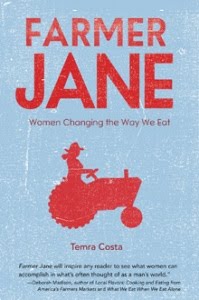
Green book of the week: Farmer Jane by Temra Costa (including an interview with the author)


If you were surprised by the fact that Michelle Obama took last Friday the spouses of 32 world leaders on a trip to the Stone Barns Center for Food and Agriculture in New York, then you really shouldn't. Sustainable and local food is becoming an increasingly significant topic and the First Lady is one of its leading supporters.


And she is not the only woman involved in this growing industry. A growing number of women is dominating the field and 30 of them are profiled in the new book of Temra Costa, Farmer Jane, which is our green book of the week.

Here are some more details about this book:

Title: Farmer Jane: Women Changing The Way We Eat

What the book is about:
Farmer Jane profiles thirty women in the sustainable food industry, describing their agriculture and business models and illustrating the amazing changes they are making in how we connect with food. These advocates for creating a more holistic and nurturing food and agriculture system also answer questions on starting a community-supported agriculture (CSA) program, how to get involved in policy at local and national levels, and how to address the different types of renewable energy and finance them.

Author: Temra Costa
Temra Costa is a nationally recognized sustainable food and farming advocate. She has written for numerous publications on hot-button issues such as Farm to School, eating locally, food safety, and how to create regional food systems. Her previous role as statewide director of California’s Buy Fresh Buy Local campaign, and other positions held with Community Alliance with Family Farmers (CAFF), worked to engage stakeholders in our food system, from farm to fridge.

Temra works, cooks, gardens and writes in the East Bay of California. She's a radio show co-host on Green 960 (www.thegreenmorning.com), works as a sustainable food systems consultant for various businesses, and speaks at events throughout the year.

This is a very interesting book on an extremely interesting issue and I really enjoyed reading these personal stories, so I decided to ask the author for an interview to learn more about it.

Hello, Temra. What was the reason you decided to write this book, focusing on women in the sustainable food world?

The timing was right! As women are taking more leadership roles in the food and farming sector as well as the business world in general.

How did you choose the women that you profile in the book?

I chose the women in Farmer Jane by sending out a call for nominations. I received responses from all over the country. It was really amazing.

From the 30 women you profile on your book, what story you felt mostly connected to on a personal level?

Almost all of the women talk about heart and community. Language that we're starting to hear more about - at least the community part.

You write in the introduction to the book that women "have long been underrepresented in the public sphere about the sheer amount of work they do, at home and outside of the home" - do you believe this is still the case when we have such prominent women figures leading what you describe as the "delicious revolution", from Michelle Obama and Alice Waters to Anna Lappe and Judy Wicks?

Women are still making less than men and will continue to be under acknowledged as long as the work that they do in the home, with family and with community is not valued.

Did you learn anything that surprised you while working on the book with regards to the role of women in the sustainable food industry?

Yeah, there are a lot of women ranchers out there! Second to women entering farming and food businesses because of the interest in local foods is women cattle ranchers that are succeeding their husbands. It's hard to imagine running a ranch without your partner but so many women are!

Why do you think we see so many women involved with urban farming?

It's small scale, serves and builds community, can be done in spare time, accesses volunteerism and has an immediate purpose.

Do you think that we'll continue to see so many women in key roles if and when the sustainable food industry will shift from a movement to an industry that is more focused on its business side?

This is a great question. I hope they are hired in the droves to do what they love and to make economic sense of it. Ultimately, it is our economic system that undervalues food and food producers. This needs to change so that people can make a right livelihood without "going corporate."

The sustainable food industry is still relatively small in size - do you believe we'll see it going mainstream in the near future?

Not as long as our FDA and USDA is being primarily run by the food companies that we need them to protect us from. Seriously, sustainable food, diversified foods, handmade foods are counter capitalistic models because they are time intensive and more hands on way of producing food.

Restructuring the food system will happen out of necessity due to water shortages and distribution challenges that will start to make local food a environmental and economic choice for businesses. Right now it's still riding a local food washing phase where there is a shift happening, but not to the scale that those marketing it to people require.

What you're working on these days? Any new book in the horizon?

Definitely! I've really loved talking about this subject and in traveling around and celebrating women of food in various communities around the country. I've got a few Farmer Jane sequel ideas that I'm working on at the moment.

Thank you, Temra! To learn more about Farmer Jane visit http://www.farmerjane.org/.

You're welcome to pick up Farmer Jane at your local, independently-owned bookstore. To find an independent store near you, click here.

In case you don't have an indie store close by, the book is also available on Amazon.

For wholesale orders, contact Gibbs Smith Publisher directly:
http://www.gibbs-smith.com/client/client_pages/sales.cfm

Yours, Raz @ Eco-Libris
Eco-Libris: Promoting   sustainable reading!

Thursday, September 23, 2010

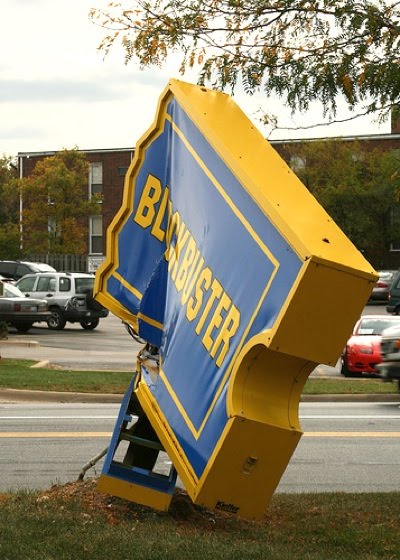
Will Barnes and Noble end up like Blockbuster? Bloggers are connecting the dots between the two

It's official: Blockbuster filed for chapter 11 bankruptcy earlier today. I mentioned Blockbuster few weeks ago with regards to Barnes & Noble as I thought B&N should learn couple of lessons from the failure of Blockbuster (as well as from Tower Records before it).

Of course many on this day connected the dots between the two and not in a positive way for B&N. Michael Wolf asked on GigaOm Tech News 'Will All Brick & Mortar Media Sink Like Blockbuster?' and wondered if this is a sign for other brick and mortar retailers:

But are Blockbuster’s troubles a sign that all large brick and mortar retailers of content — be it music, movies and yes, even books — are eventually doomed? If you look back, signs point to yes.

Although he was more optimistic about B&N ("Barnes & Noble appears to be trying to forge a digital strategy much faster "), his conclusion was still somewhat pessimistic:

Still, I expect Barnes & Noble to see significant challenges in coming years, particularly since Amazon will likely dominate e-book sales, at least in the near term. As with Blockbuster, the combination of a nimble digital rival and costly brick and mortar real-estate weighing down the actual product ties a retailer down. And we all know that what happens when you when you tie a brick to something: it sinks.

Green Street Advisors analyst Cedrik Lachance was also pessimistic. He told Reuters the following:

The future of retailers of books appears to be going the direction of DVDs, video retailers or the music industry. It appears that books will follow in that direction but it will be more slowly.

The connection between Blockbuster and B&N wasn't the only lit one made today. Apparently there are some who also see here lessons to be learned for the whole publishing industry. Mike Cane, in his post 'Blockbuster's Lesson for Print Publishing', wrote:

Hey, print publishing! Do you really think you’re providing everything people want to read in eBook format? Does Harry Potter ring a bell? What about those backlist titles Andrew Wylie moved into eBooks without waiting for any of you? What about all those backlist and even current titles that readers have scanned and uploaded and are distributing for free?

What do you think? will B&N end up like Blockbuster or B&N is a different case? And what should book publishers take from it? Is there really here a lesson for them? We'll be happy to hear your thoughts!

Yours,
Raz @ Eco-Libris

Eco-Libris: promoting sustainable reading!

Tuesday, September 21, 2010

The bus you don't want to take (no matter how much you love books..)

Last July we had a post with a list of five places where it's better to use a Kindle than a physical book.

This video got me thinking we need to have another list of places where it's better not to have neither:


As reported on mediabistro.com: GalleyCat earlier today, the Portland, OR driver was caught reading his Kindle while he is slowly driving through traffic. The video by the way was filmed by a passenger, which makes me wonders why the passenger thought he wanted to film this bus driver first and not ask him to get the Kindle out of his site right away.

Anyway, I'm quite sure Amazon won't use this video to show the Kindle is better than the iPad, although they can claim that even bus drivers find it more convenient to use.

Yours,
Raz @ Eco-Libris
Eco-Libris: Promoting   sustainable reading!

Monday, September 20, 2010

Will the iPad succeed to conquer the campus?

I heard an interesting report last Friday on NPR's excellent program 'All Things Considered' disucssing a question that I'm sure is occupying many people in the e-readers industry:

Is the iPad a game changer in the market of electronic textbooks?

As the report explained and as we all know, e-readers makes a lot of sense when it comes to students: traditional textbooks are expensive and heavy. Textbooks are also very wasteful from an environmental point of view, as not only they consume a lot of paper, but they also become irrelevant pretty quickly when new editions are published.

The Kindle was the first e-reader that tried to conquer the campuses, but without much success.Last year
Treehugger reported on a failure of a pilot test at Princeton University in which 50 students were given a Kindle DX for three of their courses. The Daily Princeteonian explained why:

But though they acknowledged some benefits of the new technology, many students and faculty in the three courses said they found the Kindles disappointing and difficult to use. “I hate to sound like a Luddite, but this technology is a poor excuse of an academic tool,” said Aaron Horvath ’10, a student in Civil Society and Public Policy. “It’s clunky, slow and a real pain to operate.”

Horvath said that using the Kindle has required completely changing the way he completes his coursework. “Much of my learning comes from a physical interaction with the text: bookmarks, highlights, page-tearing, sticky notes and other marks representing the importance of certain passages — not to mention margin notes, where most of my paper ideas come from and interaction with the material occurs,” he explained. “All these things have been lost, and if not lost they’re too slow to keep up with my thinking, and the ‘features’ have been rendered useless.”

The NPR report also mentioned the fact that Reed College in Portland, which ran this year a trial with the iPad, did the same thing last year with the Kindle. The feedback on the Kindle was very similar to the one from Princeton:

..Montgomery-Amo says they're hoping to have better luck with the iPad than they had with the Kindle.

"That went … I think horribly would be a good way of putting it," he says. "The problem is that the Kindle is less interactive than a piece of paper in that the paper, you can quickly write notes in the margin or star something or highlight something, and the Kindle was so slow at highlighting and making notes that the students stopped reading them as scholarly texts and started reading them like novels."

The result, according to Montgomery-Amo, is that his students didn't understand the material as well as they did when using a traditional textbook. To make matters worse, he says the Kindle proved unable to keep up with the class discussion — it would take half a minute to load a page and by then, the discussion would have lost its momentum.

This is bad news for Amazon, but might be good news for Apple. But is it? What did the students think about the iPad? Well, according to NPR's report, they were much happier with it:

Senior Michael Crane and junior Rebecca Traber say that even though they've only had their iPads for a few weeks, they've already been pleasantly surprised.

"I thought it would just kind of be a fun toy," Crane says. "It still is a fun toy, but it also … makes it really easy to read articles for class. In fact, I read pretty much all my articles for all my classes on this now. The instant boot time I think is really nice because if I have half an hour somewhere, I don't have to set up my laptop to get my articles out."

"I actually found it startlingly easy to annotate," Traber says. "You just swipe your finger and you highlight."

The question remains whether these positive experiences will be eventually transformed into actually buying the iPad. Well, not so fast. The students interviewed for the report bring up several issues that will get them to think twice before buying one: the price of the iPad, it's easier to do many functions on laptop (even just writing) and the keyboard (as one student said - "I don't like the keyboard at all.").

There's no doubt that we're heading towards a digital age of e-textbooks. It's just a matter of time. The bottom line is that it's a win-win especially for students. The only question is which e-reader will learn to adjust itself to meet students' special needs - it looks like the iPad is much better positioned for that right now, but I'm sure Amazon haven't said the last word.

Yours,
Raz @ Eco-Libris


Eco-Libris: Promoting sustainable reading!

Friday, September 17, 2010

14-year old author Taylor Michie is going green with Eco-Libris!


We're very happy to announce our new collaboration with author Taylor Michie to green up his first book 'Racing Winds'.

Trees will be planted with Eco-Libris to balance out the printed copies of the book, starting with 50 trees that will be planted with our planting partner AIR in Guatemala. Also, starting next week, he will be offering Eco-Libris sticker (free of charge) saying “One tree planted for this book.” with every copy purchased!

This is a unique collaboration given that Taylor Michie is 14 years old and actually becomes the youngest author we have partnered with. But make no mistake - not only that Taylor has impressive accomplishments to his age, including this book, he also has a very impressive commitment to the environment, which is the reason he approached us in the first place.

So what's the book all about? Here are some more details:

Dave Rhodes is a weathered boat captain, with a ton of races and regattas under his belt. He is chosen to lead the Puma apparel-sponsored Volvo Ocean Race team. An easy task at first, Dave soon realizes that all his years of experience have not prepared him for what comes up in this race. Conspiracy is becoming a factor in this race, and it is now up to Dave and his race team to save the race (and win it for themselves!). Join us for this action-packed mystery written by then-13-year old Taylor Michie.

book size: 109 pages
formats available: paperback
awards won by book/author: book featured at Volvo Ocean Race in Boston, MA, May 2009; author won United States Sailing's Sailor of the Week award, May 2009;

For more information on Taylor Michie and his book visit http://www.racingwinds.com/


Yours,
Raz @ Eco-Libris


Eco-Libris: Promoting sustainable reading!

Wednesday, September 15, 2010

Asia Pulp & Paper (APP) - good or bad? Rolf Skar of Greenpeace is replying to Ian Lifshitz

Last month we interviewed here Ian Lifshitz, Sustainability & Public Outreach Manager at Asia Pulp & Paper (APP), one of the largest pulp and paper companies in the world that has also long been a target of green groups for its logging practices.

Ian presented in the interview APP's point of view regarding the company's activities and the accusations against it. One of the issues discussed in the interview was a Greenpeace report "How Sinar Mas is pulping the planet", where Greenpeace claimed that APP "is destroying Indonesia’s rainforests and carbon-rich peatlands."

Following the interview, we got a request from Rolf Skar,
Senior Campaigner at Greenpeace, to respond to the interview and we happily agreed, as we want to use this blog as a platform to promote a better understanding of the issues discussed and hopefully contribute to the creation of solutions.


Hello Rolf. What were your thoughts after reading the
interview with Ian Lifshitz?

My first reaction was that the interview demonstrates just how out of touch APP remains. Our evidence, based on Ministry of Forestry data, satellite imagery analysis, aerial surveillance and on the ground documentation shows how APP continues to clear natural forests and peatlands. The evidence is simply overwhelming. This is a company that fails to meet even its own sustainability targets to stop using natural forest fiber for its products.

The apparent APP preference for rhetoric over substantive change has led every NGO that has tried to engage with the company to conclude that the company is not serious about sustainability. An example is when the auditing organization Rainforest Alliance broke off relations in 2008, concluding that “we do not wish to be used by APP again in order to mislead the public and the consumers.”

I was also not surprised to see Ian mention his role as a spokesperson to “educate North American audiences about the balanced approach developing countries…need to take between social and economic priorities.” I hope Ian will recognize that though Greenpeace campaigns have tremendous impact in North America and Europe, our campaign to protect Indonesian rainforests is guided and led by our Indonesian staff – people who know very well the complicated economic, social and environmental realities of their native land.

Ian Lifshitz described your report on APP's operations in Indonesia "unequivocally inaccurate and deliberately misleading" - what is your response?

I would like Ian to show evidence that Greenpeace is “unequivocally inaccurate.” His main claim seems to be about the expansion issue, for which the source of our evidences was an internal Sinar Mas Group presentation, by the APP pulpwood supplier Sinarmas Forestry. It was presented as an “area development project for supporting mill license capacity” in 2007. The project was sponsored by Aida Greenbury’s boss and head of APP, Teguh Ganda Widjaja, and his brother, head of Sinarmas Forestry, Muktar Widjaja.

I assume Ian was not party to this plan, and encourage him to take a look at the excerpts form this presentation included in our recent report, Empires of Destruction.


It appears like Ian is not the only one raising questions about your report. APP reported last month to its shareholders that the (yet unreleased) audit of the international accounting and auditing firm Mazars found that "the facts contained in the APP report were accurate and, therefore, the allegations made by the environmental NGOs were indeed baseless, inaccurate and without validity." - What's your reply to Mazars' findings?


The first thing to note is that the quote you referenced is from APP. It is their interpretation of the Mazars report, not what Mazars concluded. Given the liberties APP takes with the facts, this is an important distinction.


Second, it should be noted that Mazars essentially audited whether a specific APP report met generally accepted standards for CSR reporting – things like whether the claims were properly footnoted or referenced. Mazars made no attempt to assess the accuracy of our specific claims against APP.


Mazars is not in a position to audit APP mills or concession areas to make judgements about sustainability. This is not its area of expertise. Further, a number of the “key facts” they highlight are not referenced and therefore cannot be evaluated. APP’s attempt to use this audit to justify their activities will, frankly, not convince any stakeholder with even a basic understanding of sustainability.


Did you try in the past to communicate with APP?


Greenpeace has written to APP on a number of occasions and has typically received long, puzzling responses from Aida Greenbury, the APP sustainability and stakeholder engagement director. Instead of a meaningful response, we have consistently received rhetoric designed to justify their business as usual approach. It is difficult to engage with a company that refuses to acknowledge it has a problem.

Greenpeace activists unfurl a giant banner “APP-Stop destroying Tiger Forests” to expose ongoing forest destruction by pulp giant Asia Pulp & Paper (APP). The banner was deployed in an area of active clearing by PT. Tebo Multi Agro (TMA), an affiliate of APP, on the southern part of the Bukit Tigapuluh landscape. © Greenpeace / Ardiles Rante

What are the demands of Greenpeace from APP? What are the steps that Greenpeace would like APP to take to meet these demands?

To be clear, our campaign is about stopping deforestation, not opposing APP. Greenpeace is asking that APP pulpwood supplier, Sinar Mas Forestry, immediately halt further clearance of natural forest and peatland in Indonesia. We will continue to encourage responsible companies to stop all business with APP until the company takes this action.

A wide range of international companies including Nestlé, Kraft and Unilever, are in the process of implementing global sustainability policies that will exclude APP products unless it makes substantial improvement to its fiber supplies. Many others, like Kimberly-Clark, have never purchased from APP and have reaffirmed commitments to keep APP out of their supply chains.


Greenpeace is well known in its ability to transform activism and campaigns against companies into collaboration and joint work with these companies - is this the case here as well?


We have an informal motto that we have “no permanent friends and no permanent enemies.” This allows us to work with companies that are doing the right thing, regardless of histories. The fact that we do not accept corporate or government contributions allows us to stay independent, flexible and fair.


From the Canadian Boreal forest to the Amazon, Greenpeace has a long history of working collaboratively with companies we had previously butted heads with. We are open to this with APP as well, but we will need to see a genuine commitment to change that has to date not been evidenced.

APP will have to realize that business as usual is no longer an option for industry leaders. As long as to APP fails demonstrate basic criteria – like fulfilling its own sustainability commitments, or agreements reached with NGOs – it will be difficult to move forward. This is not just something Greenpeace has experienced. Back in 2008, the last major corporate who tried to engage with APP – office giant Staples – gave up, concluding that APP was a “great peril” to the their brand. I am not sure what it will take for APP to decide it is time to move forward. Until that day, Greenpeace campaigning will intensify pressure on the company and its customers.


If you would have sat with Ian to the same table - what would you like to tell him?


I don’t want to sound severe, but Ian is either being very badly misled by his employers, or is simply not interested, for any number of reasons, in sustainability. If it is the former, I would invite him, and senior management at APP, to come to the field with Greenpeace to see for themselves the reality of APP business practices. If it is the latter, I would most likely not have a productive conversation with him; we would continue talking past each other, and the status quo would continue. When APP is genuinely ready to talk, Greenpeace will be too.


I would like to thank Rolf for taking the time to reply my questions and I would also invite you all to add your comments, questions and any other feedback you have on this issue.


The interview with Ian Lifshitz is available at http://ecolibris.blogspot.com/2010/08/app-good-or-bad-interview-with-worlds.html


Yours,
Raz @ Eco-Libris


Eco-Libris: Promoting sustainable reading!