Showing posts with label plant a tree. Show all posts

Saturday, August 4, 2012

Eco-Libris offers monthly subscription option for green readers with large libraries!


I'd like to remind you about one of the options available on our website -
monthly subscription.

If you have a big library at home and you want to green it up one bookshelf or bookcase at a time, balancing out 5 or 10 books every month on regular basis, can be a good fit for you.

The process is very easy and similar to one-time purchase: Visit our website (www.ecolibris.net) and go to
the subscription page, where you choose how many books you want to balance out each month. Then just click on the 'Buy' bottom and complete the payment process on the PayPal page. And that's it!

Then every month we'll balance out for you the number of books you chose by planting trees in developing countries with our planting partners. You will receive a confirmation email from PayPal following each monthly payment as well as our "one tree planted for this book" stickers.

And that's not all, if you're also a member at BookMooch, you will receive 1 bookmooch point for every 10 books you balance out!

If and when you'll decide that you want to suspend your subscription, you will be able to do it easily and quickly on PayPal website.

We are very happy to offer this option to all the eco-conscious readers out there who want to green up many of their books but want to do gradually.
If you have any questions about the subscription option, please feel free to email me at: raz [at] ecolibris [dot] net.

Yours,
Raz @ Eco-Libris

Eco-Libris: Promoting sustainable reading!

Wednesday, July 18, 2012

House Improvement Ideas for A Greener Life At Home


This is a guest column by Aileen Pablo

As homes become older and people are opting to make improvements rather than move to new locations, more families are wondering what they can do to not only save themselves money but also create a more eco-friendly environment. After all, older homes were built without the innovative materials found in newer homes today making them more of an energy drain than most homeowners would care to admit.

If you are looking for ways to update your older home into a greener way to live, here are a few projects you can do in your house.

• Add insulation – This is the easiest way to keep moderate temperatures in and extreme elements out. With recent updates to insulation technology older homes are less equipped to help homeowners do this. Adding insulation can cut your energy costs year round by as much as 10%. And not only is this savings significant but so is the savings to the environment is energy it takes to heat or cool your home.

• Plant a tree – This is a great way to quickly upgrade the look of your home, add more carbon dioxide eating plants and create shade to help keep the sun from beating down on your house causing it to heat up faster. With so many benefits it is one of the easiest ways to make a quick and extremely green switch to improve your home.

• Go solar without the panels – Just as you want to cool your house naturally on hot days, you will also want to use the power of the sun to help heat your home on cold days. If you have windows that are exposed to the sun, direct the warming rays into your home by opening up your blinds and letting them in. Darkening your house only keeps the cool temperatures inside but exposing it to some natural solar heating helps you to naturally add some warmth without using excessive gas with your heating system.

• Save Water – Saving electricity is not the only way to make your home go green. You can also make quick and easy updates to your appliances to save water. This is especially true with older appliances such as toilets and showerheads. In fact, low flow toilets can save an average of 4,000 gallons each year and low flow showerheads can reduce your usage by as much as 50%. Update your home with new looks that come with water saving technology and cut your water bill by gallons each month.

• Use sensors on lights – You may feel more comfortable having your lights on in the early evening hours when there is traffic on the street and more people likely to stop by unexpectedly. However, once you are in bed and during the wee hours of the morning, save electricity and set your lights to turn off automatically. This way, you can cut costs without having to rely on your memory to turn off the lights each night before bed.

• Weather strip old windows and door jams – As much as 30% of your heating and cooling can slip out of your home and let in the extreme temperatures you are trying to keep out without the proper weather stripping. Visit your local home improvement store to find the right solution for your home and start insulating your door jams and windows easily and more efficiently to reduce costs immediately.

• Use zone heating methods intelligently – Many people think by having a wood burning fire they are adding to the warmth of their home. However, these fireplaces tend to suck more heat out of the home by allowing it to get sucked up the chimney then they add. Instead, use covered fireplaces to allow the heat to ventilate out of the fireplace and avoid it from being sucked up through the chimney.

• Replace your appliances with high efficiency solutions – New technology has given homeowners a way to go green and protect the environment through high efficiency appliances. Even more money saving and encouraging to make this switch are the utility companies that provide their customers with additional rebates just for making the switch. Contact your utility providers to see if this is something they will do for you.

Homeowners can save significant money each year by making these small home improvement updates and turn their home from an environmental drain to an eco-friendly living solution.

[Image credit: nikcame, Flickr Creative Commons]

Author Bio:

Aileen Pablo is part of the team behind Open Colleges, one of Australia’s leading providers of TAFE courses equivalent and interior design courses. When not working, Aileen blogs about travel, lifestyle, home improvement, and beauty tips. She is also often invited as a speaker in Personality Development Seminars in the Philippines.If you have a blog and would like free content. You can find him on Google+.

Thursday, April 12, 2012

Dream Traveler: Africa, a new children's book is looking for funding on Kickstarter

We are recommending here almost every week on a new interesting book that is looking for funding on Kickstarter. This week we have the pleasure to introduce you to the first book in the series of children's books entitled the Dream Traveler series, which is about connecting people with cultural awareness, travel, geography, imagination and creativity, as well as and also conscious living and a loving family.

We also have a special interest in this series. If the required funding will be raised, it will also be used to plant a tree with Eco-Libris to green up the printed books!

The series is written by Stacey Gates and illustrated by Ryan Wardlow. The first book that is looking for funding to get published is Dream Traveler: Africa.

Goal: $7,000

Pledged so far: $2,035 (33 backers)

Still missing: $4,965

Days left: 50 days (until June 2)


About the project:

In the Dream Traveler series, a North American boy named Canyon manifests his way around the world through his dreams for a glimpse of how people live their lives in other countries. Readers will travel with him as he meets children who joyfully accept him into their lives and are just as curious and interested in him, as he is in them.

The books in the series are soulful tales of love and adventure for ages 4 and up. They bring about cultural awareness, encourage imagination and creativity, and through the illustrations, they exemplify environmental consciousness and health. Music, art and more are threaded throughout the stories as well.

Dream Traveler Africa

To grab the reader's attention, the story begins with Canyon returning from his first dream travel to Canada. He dives on his parent's bed shouting with laughter, "You'll never believe where I just came from!" He sums up his adventure.

For more information please visit Dream Traveler: Africa page on Kickstarter -

Last week's Kickstarter recommendation - Yeti Leaves Home

Yours,
Raz @ Eco-Libris

Eco-Libris: Plant a tree for every book you read!

Thursday, October 13, 2011

Beetroot Books is collaborating now with Eco-Libris (our first store in the UK!)

We're happy to announce on a new bookstore that is collaborating with Eco-Libris - Beetroot Books, the first bookstore we're working with in the UK!

This unique online bookstore is joining Eco-Libris bookstores program and will offer the store's customers the opportunity to plant a tree for every book they buy there and receive our "One tree planted for this book" sticker with their new book!

Why buying books with Beetroot Books (besides the fact they're partnering with us)? Here are some convincing reasons that will also help you to get to know them better:

They specialize in titles that enable you to think, act, learn, challenge, enjoy. They’re a one stop shop for everything sustainable, alternative, green and active – for all ages. Also, every one of their books is hand-picked – if you need advice or recommendations about any of our books or subjects we’ll be willing, able and happy to help you.

They stock and promote titles from independent publishers and unpublished writers. They also donate £1 for every gardening book sold to disability charity and £1 for every children’s book sold to child literacy charity Springboard for Children. Last but not least, Beetroot Books is powered 100% by renewable energy.

Bottom line: Beetroot Books is different from corporate stores - While corporate stores care what they sell, Beetroot care on how they sell. they offer you the best prices but won’t exploit in order to do so.

You can visit them at http://www.beetrootbooks.com/

Yours,
Raz @ Eco-Libris

Eco-Libris: Promoting Sustainable Reading!


Friday, July 8, 2011

Happy birthday - Eco-Libris is four years old!

On Monday, when the whole US celebrated Independence Day, Eco-Libris had its own birthday celebration - we have just turned 4 years old!

Yes, another year passed and just like the year before, it wasn't an easy one. The economic environment is still very challenging but we still did our best not only to keep our head above the water, but also to grow, meet new goals and move forward in our quest to make reading more sustainable.

And indeed it was a year of progress - we managed to create more partnerships, ran for the second time our green books campaign, enhanced our educational work, continued our involvement at the Book Industry Environmental Council (BIEC), contributed to the discussion on how green e-books are, assisted in the preparation of a shareholder resolution calling Amazon to disclose its environmental impacts, provided analysis of the trends in the book industry from a green point of view and of course planted more trees!

I am proud to report that Eco-Libris balanced out so far 177,759 books, which resulted in 198,063 new trees, of which 39,114 are the result of our operations on the 4th year.

* Photo above is courtesy of our planting partner AIR from the 2009 planting season - AIR volunteer and young helper planting Aliso trees to fertilize family crop, in El Tablon, Guatemala.

We would also like to take this opportunity and thank everyone involved in our efforts - from the dedicated eco-conscious readers that balance out their books with us, through our partners - publishers, authors, bookstores, businesses, organizations and others that take action to support sustainable reading and of course our wonderful planting partners, which are doing such a great job in planting the trees in developing countries.

Here's a reminder of some of things we did last year, month by month:

July 2010
A new collection of poetry and prose of author Janice Winokur is going green with Eco-Libris

Is going green really worthwhile for authors?

August 2010
Natanya by Dror Burstein is the first book in Hebrew to go green with Eco-Libris

A new book of Flux by the Danish Paulo Coelho is going green with Eco-Libris

September 2010
Will the iPad succeed to conquer the campus?

14-year old author Taylor Michie is going green with Eco-Libris

October 2010
Is it greener to borrow ebooks from your local library?

The Last Original Idea is joining the "100 Trees Project" of Infinity Publishing and Eco-Libris

November 2010
200 bloggers are taking part in the Green Books Campaign to support books printed on environmental paper

Can Going Green Help Publishers, or Just Planet Earth?

December 2010
How book companies performed on the Greenpeace Boreal Marketplace Review?

Annual assessments of Eco-Libris' planting partners are available now online


January 2011
How green is your (and my) Kindle?

The future of Independent bookstores (or: 5 comments on 'Small Bookstores Struggle for Niche in Shifting Times')

February 2011
Dr. Anne Hallum, founder and director of our planting partner AIR was named one of CNN’s 2011 Heroes!

Brighter Books is collaborating with Eco-Libris to plant a tree for every printed copy of their books!

March 2011
Launching our Earth Day campaign, 41 Reasons to Plant a Tree for Your Book

The Scandinavian publisher Whyte Tracks is partnering with Eco-Libris

April 2011
Global Sky's tree planting initiative celebrates the planting of more than 2,000 trees!

SHI & Eco-Libris: Launching Culantro Rojo Organics

May 2011
Raven Wings and 13 More Twisted Tales by Frank Poe Jr. has joined the "100 Trees Project"

5 ways to green your ebook reading

June 2011
Why Amazon rejected a shareholder decision to disclose how it deals with climate change?

10 best green ebooks for Father's Day!

Saturday, May 14, 2011

Join our sustainability journey and plant a tree for every book you read!

Do you think that sustainability is a journey? Do you believe that small actions lead to big change? If you do, we invite you to join us on our journey to make reading more sustainable and plant trees for the books you read, write or publish.

How we do it?

Planting trees to balance out paper used for books
Eco-Libris is offering book readers, as well as publishers and authors the opportunity to balance out the trees cut down for the production of books by planting trees in developing countries.

We work to plant these trees together with our planting partners – three highly respected US and UK based non-profit organizations that work in collaboration with local communities in developing countries to plant these trees. These trees are planted in high ecological and sustainable standards in Latin America (Nicaragua, Guatemala, Panama, Belize, Honduras) and Africa (Malawi), where deforestation is a crucial problem.
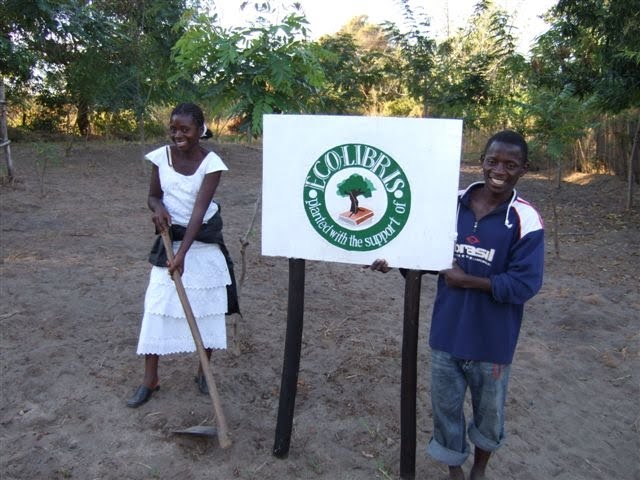
Planting trees in these places not only helps to fight climate change and conserve soil and water, but also benefits many local people, for whom these trees offer many benefits, such as improvement of crops and additional food and income, and an opportunity for a better future. , where deforestation is a crucial problem. Planting trees in these places not only helps to fight climate change and conserve soil and water, but also benefits many local people, for whom these trees offer many benefits, such as improvement of crops and additional food and income, and an opportunity for a better future.

Readers also receive a sticker made of recycled paper for every book they balance out saying “One tree planted for this book”, which they can later display on their books’ sleeves.

So far Eco-Libris balanced out over 176,000 books, which results in more than 196,000 new trees planted with its planting partners in developing countries.

Promoting adoption of sustainable practices in the book industry
One of the examples of our work to promote sustainability in the book industry is our Green Books Campaign: Every year in the last couple of years (2009 and 2010), on Nov. 10 at 1 p.m., hundreds of bloggers simultaneously have published reviews of books printed on recycled or FSC-certified paper. By turning a spotlight on books printed using greener methods, we aim to raise consumer awareness about considering the environment when making book purchases.

Last year about 200 bloggers reviewed 200 books that came from 56 publishers from the U.S., Canada, Australia, and the U.K. This diverse group of publishers participating in the campaign included both small and large presses who print books on recycled and/or FSC-certified paper, such as Penguin Group, Scholastic, Barefoot Books, McClelland & Stewart, Simon and Schuster Children’s Publishing, Sterling Publishing, DK Publishing, Harvard Business Press, Island Press, North Atlantic Books, McGraw-Hill, ABRAMS and Picador.

This unique campaign is transforming into a tradition and we are glad to see continuous enthusiasm about it from publishers, authors, bloggers and readers (we estimate that last year about 40,000 people were exposed to the campaign) alike.

We plan to keep this tradition going this year as well – This year’s campaign, just like last year, will take place in collaboration with Indigo Books & Music, the largest book retailer in Canada, as part of their efforts to eliminate the use of wood fiber from endangered forests and facilitate a broader sustainability shift in the publishing and paper supply chain.

Helping to make e-reading greener
eBooks are becoming an important part of the book industry and we try not just to find what does it means in terms of the industry’s carbon footprint or how sustainable e-reading is in comparison with paper books, but also to make an impact and help making e-reading greener.

One of our latest efforts is helping Calvert Investments, one of the largest sustainable and responsible investment (SRI) companies in the US to file a shareholder resolution with Amazon.com, calling the company to prepare a report that will assess the impact of climate change on Amazon, including disclosure on the Kindle’s environmental impacts, or in other words – finally making the carbon footprint of the Kindle public.

We feel this is a necessary step not only to learn what the carbon footprint of the Kindle is, but also to move forward other e-reader sellers, such as B&N and Sony to reveal their carbon footprint. If we want e-reading to be a truly green option, we must have transparency and given Amazon’s refusal to provide such data, we’re proud on being part of the efforts to convince them to do the right thing!

So, if you want to join our journey, you’re more than welcome to do it by planting trees for your books – we welcome readers, authors and publishers to join us and make reading more sustainable!

Yours,
Raz @ Eco-Libris

Eco-Libris: Promoting sustainable reading!

Friday, April 22, 2011

Happy Earth Day - Reason no. 41 on our 41 Reasons to Plant a Tree for Your Book Campaign

Today is Earth Day, which means it's the last day of our Earth Day campaign - 41 Reasons to Plant a Tree for Your Book, where we shared with you for 41 days 41 reasons provided by reader, authors and publishers in celebration of the upcoming 41st anniversary of Earth Day!

With more than 190,000 trees planted so far on behalf of readers, authors and publishers working with Eco-Libris, it's no surprise that we think planting trees to green up books is a great idea.. But we also want to hear what readers as well as authors and publishers we work with think about it and why they believe planting trees for their books is a good idea.

We got great replies and you can find them all on our Earth Day 2011 page. Today we would like to share with you the last reply, no. 41:

Reason no. 41:
It just makes me happy to know that new trees are planted on behalf of my books. - Kelley

Thank you Kelley for sharing with us your thoughts on planting trees for your books! Thank you also to all the other readers, authors and publishers who sent us their replies. You're inspiration to all of us.

We also want to thank our partners who contributed wonderful prizes, including Strand Bookstore and Simon & Schuster Audio and many more authors and publishers whom we collaborate with. Last but not least, thank you to Susan Newman who designed the campaign's logo. Thank you all!

We had a lot of fun in the last 40 days. We hope that you enjoyed the campaign as well and found it interesting, valuable and hopefully inspiring!

Happy Earth Day!
Raz @ Eco-Libris

Eco-Libris: Promoting sustainable reading!

Thursday, April 21, 2011

Earth Day Campaign - 41 Reasons to Plant a Tree for Your Book: Reason no. 40

We have one more day of our Earth Day campaign - 41 Reasons to Plant a Tree for Your Book, where we share with you 41 reasons provided by readers in celebration of the upcoming 41st anniversary of Earth Day!

With more than 190,000 trees planted so far on behalf of readers, authors and publishers working with Eco-Libris, it's no surprise that we think planting trees to green up books is a great idea.. But we also want to hear what readers think about it and why they believe planting trees for their books is a good idea.

So for 41 days until Earth Day, we publish here the 41 best replies we receive, one reply a day. All replies are gathered and presented on the Earth Day 2011 page.

Reason no. 40:
Planting trees for books makes sense to me as a human being, a mom and a book lover! - Ana

Thank you Ana for sharing with us your thoughts on planting trees for your books!

Ana, just like all the other readers whose replies we'll publish, is winning one of the great 41 prizes we give away on this campaign, courtesy of our partners. Winners can choose their prize from a great list of gifts including audiobooks from Simon & Schuster Audio (such as The Half Life by Jennifer Weiner, Left Neglected by Lisa Genova and Essence of Happiness by the Dalai Lama) and great books, like Spit That Out! by Paige Wolf and The Healthy Home by Dave Wentz and Dr. Myron Wentz. You can see the full list of the prizes on our earth day campaign's page.

Every day we'll give further details on one of the prizes. Today we present you with the audiobook Planet Home by Jeffrey Hollender and Alexandra Zissu.

Planet Home by Jeffrey Hollender and Alexandra Zissu - FROM THE COFOUNDER OF SEVENTH GENERATION, the most trusted brand in environmentally friendly household products, comes this indispensable guide to maintaining absolutely everything in the home in a natural, nontoxic way. Jeffrey Hollender leads you through each room of the house with straightforward advice, comprehensive checklists, quick tips, and unparalleled resources while revealing the hidden repercussions of daily routines that most of us take for granted.

From improving air quality in your bedroom to avoiding mildew in the bathroom, from sourcing local or organic food to safely laundering your clothes, Planet Home offers invaluable information for making conscious decisions for your family, your neighbors, and our shared planet home. With additional information on power, garbage and recycling, air quality, and community activism, this book goes a step further to describe how any household is part of a much larger system.

Planet Home offers a unique, comprehensive, educational, and easy approach to helping you and your family lead healthier lives as we collectively protect and maintain our shared resources for many years to come.

Yours,
Raz @ Eco-Libris

Eco-Libris: Promoting sustainable reading!

Wednesday, April 20, 2011

Earth Day Campaign - 41 Reasons to Plant a Tree for Your Book: Reason no. 39

We have 2 more days of our Earth Day campaign - 41 Reasons to Plant a Tree for Your Book, where we share with you 41 reasons provided by readers in celebration of the upcoming 41st anniversary of Earth Day!

With more than 190,000 trees planted so far on behalf of readers, authors and publishers working with Eco-Libris, it's no surprise that we think planting trees to green up books is a great idea.. But we also want to hear what readers think about it and why they believe planting trees for their books is a good idea.

So for 41 days until Earth Day, we publish here the 41 best replies we receive, one reply a day. All replies are gathered and presented on the Earth Day 2011 page.

Reason no. 39:
This is a great interim solution on our way to implement cradle to cradle solutions, which makes so much sense. William McDonough and Michael Braungart wrote about it in their book, Cradle to Cradle: Remaking the Way We Make Things: The tree, among the finest of nature's creations, plays a crucial and multifaceted role in our interdependent ecosystem. As such, it has been an important model and metaphor for our thinking, as you will discover. But also as such, it is not a fitting resource to use in producing so humble and transient a substance as paper. The use of an alternative material expresses our intention to evolve away from the use of wood fibers for paper as we seek more effective solutions." - Richard

Thank you Richard for sharing with us your thoughts on planting trees for your books!

Richard, just like all the other readers whose replies we'll publish, is winning one of the great 41 prizes we give away on this campaign, courtesy of our partners. Winners can choose their prize from a great list of gifts including audiobooks from Simon & Schuster Audio (such as The Half Life by Jennifer Weiner, Left Neglected by Lisa Genova and Essence of Happiness by the Dalai Lama) and great books, like Spit That Out! by Paige Wolf and The Healthy Home by Dave Wentz and Dr. Myron Wentz. You can see the full list of the prizes on our earth day campaign's page.

Every day we'll give further details on one of the prizes. Today we present you with the book Knitting Green: Conversations and Planet Friendly Projects by Ann Budd.

Knitting Green: Conversations and Planet Friendly Projects by Ann Budd - Detailing a wide range of perspectives and approaches to environmental issues, this unique crafting manual offers ideas for knitting conscientiously. Leading figures of the industry, from designers to yarn company executives, share their methods for integrating green principles into their work and lives—selecting organic products, facilitating an alternative to chemical detergent, recycling old projects, reducing disposable plastic bags, and creating pieces that provide warmth and save on energy.

Inventive and timely, this practical guidebook explains answers to important questions such as
What makes a yarn organic? and Are natural dyes safer than chemical dyes? Providing 22 clever designs for earth-friendly garments, accessories, gifts, and home furnishings, craft enthusiasts of all skill levels will enjoy projects that balance the altruism of saving the planet with the joyful benefits of their favorite hobby.

Yours,
Raz @ Eco-Libris

Eco-Libris: Promoting sustainable reading!

Tuesday, April 19, 2011

Earth Day Campaign - 41 Reasons to Plant a Tree for Your Book: Reason no. 38

We have 4 more days of our Earth Day campaign - 41 Reasons to Plant a Tree for Your Book, where we share with you 41 reasons provided by readers in celebration of the upcoming 41st anniversary of Earth Day!

With more than 190,000 trees planted so far on behalf of readers, authors and publishers working with Eco-Libris, it's no surprise that we think planting trees to green up books is a great idea.. But we also want to hear what readers think about it and why they believe planting trees for their books is a good idea.

So for 41 days until Earth Day, we publish here the 41 best replies we receive, one reply a day. All replies are gathered and presented on the Earth Day 2011 page.

Reason no. 38:
Trees are the soul of the earth and books are the soul of humanity - Ben

Thank you Ben for sharing with us your thoughts on planting trees for your books!

Ben, just like all the other readers whose replies we'll publish, is winning one of the great 41 prizes we give away on this campaign, courtesy of our partners. Winners can choose their prize from a great list of gifts including audiobooks from Simon & Schuster Audio (such as The Half Life by Jennifer Weiner, Left Neglected by Lisa Genova and Essence of Happiness by the Dalai Lama) and great books, like Spit That Out! by Paige Wolf and The Healthy Home by Dave Wentz and Dr. Myron Wentz. You can see the full list of the prizes on our earth day campaign's page.

Every day we'll give further details on one of the prizes. Today we present you with the book Four Fish: The Future of the Last Wild Food by Paul Greenberg.

Four Fish: The Future of the Last Wild Food by Paul Greenberg - Our relationship with the ocean is undergoing a profound transformation. Whereas just three decades ago nearly everything we ate from the sea was wild, rampant overfishing combined with an unprecedented bio-tech revolution has brought us to a point where wild and farmed fish occupy equal parts of a complex and confusing marketplace. We stand at the edge of a cataclysm; there is a distinct possibility that our children's children will never eat a wild fish that has swum freely in the sea.

In Four Fish, award-winning writer and lifelong fisherman Paul Greenberg takes us on a culinary journey, exploring the history of the fish that dominate our menus---salmon, sea bass, cod and tuna-and examining where each stands at this critical moment in time. He visits Norwegian mega farms that use genetic techniques once pioneered on sheep to grow millions of pounds of salmon a year. He travels to the ancestral river of the Yupik Eskimos to see the only Fair Trade certified fishing company in the world. He investigates the way PCBs and mercury find their way into seafood; discovers how Mediterranean sea bass went global; Challenges the author of Cod to taste the difference between a farmed and a wild cod; and almost sinks to the bottom of the South Pacific while searching for an alternative to endangered bluefin tuna.

Fish, Greenberg reveals, are the last truly wild food - for now. By examining the forces that get fish to our dinner tables, he shows how we can start to heal the oceans and fight for a world where healthy and sustainable seafood is the rule rather than the exception.

Yours,
Raz @ Eco-Libris

Eco-Libris: Promoting sustainable reading!

Tuesday, March 29, 2011

Earth Day 2011 - 41 Reasons to Plant a Tree for Your Book: Reason no. 17

We continue with our Earth Day campaign - 41 Reasons to Plant a Tree for Your Book, where we share with you 41 reasons provided by readers in celebration of the upcoming 41st anniversary of Earth Day!

With more than 180,000 trees planted so far on behalf of readers, authors and publishers working with Eco-Libris, it's no surprise that we think planting trees to green up books is a great idea.. But we also want to hear what readers think about it and why they believe planting trees for their books is a good idea.

So for 41 days until Earth Day, we publish here the 41 best replies we receive, one reply a day. All replies are gathered and presented on the Earth Day 2011page.

Reason no. 17:
Cynics call books dead trees. Planting a tree for every book brings the book back to life, several times over. It closes the loop of the publishing cycle by replenishing its principal resource. Optimists say, "Books can be live trees." - Peter Korchnak, Founder and CEO, GoodBookery and co-editor of The Portland Bottom Line: Practices for Your Small Business from America's Hotbed of Sustainability

Thank you Peter for sharing with us your thoughts on planting trees for your books!

We want to mention again the great prizes we give away on this campaign, courtesy of our partners. Winners can choose their prize from a great list of gifts including audiobooks from Simon & Schuster Audio (such as The Half Life by Jennifer Weiner, Left Neglected by Lisa Genova and Essence of Happiness by the Dalai Lama) and great books, like Planet Home by Jeffrey Hollender, Spit That Out! by Paige Wolf, Menu Dating by Tristan Coopersmith and The Healthy Home by Dave Wentz and Dr. Myron Wentz. You can see the full list of the prizes on the campaign's page.

Every day we'll give further details on one of the prizes. Today we present you with the book
Knitting Green: Conversations and Planet Friendly Projects by Ann Budd.

Knitting Green: Conversations and Planet Friendly Projects by Ann Budd - Detailing a wide range of perspectives and approaches to environmental issues, this unique crafting manual offers ideas for knitting conscientiously. Leading figures of the industry, from designers to yarn company executives, share their methods for integrating green principles into their work and lives—selecting organic products, facilitating an alternative to chemical detergent, recycling old projects, reducing disposable plastic bags, and creating pieces that provide warmth and save on energy.

Inventive and timely, this practical guidebook explains answers to important questions such as
What makes a yarn organic? and Are natural dyes safer than chemical dyes? Providing 22 clever designs for earth-friendly garments, accessories, gifts, and home furnishings, craft enthusiasts of all skill levels will enjoy projects that balance the altruism of saving the planet with the joyful benefits of their favorite hobby.

We still have some spots available so please send us your reply to
info@ecolibris.net. We look forward to hearing from you.

Yours,
Raz @ Eco-Libris

Eco-Libris: Promoting sustainable reading!

Monday, March 28, 2011

Earth Day Campaign - 41 Reasons to Plant a Tree for Your Book: Reason no. 16

We continue with our Earth Day campaign - 41 Reasons to Plant a Tree for Your Book, where we share with you 41 reasons provided by readers in celebration of the upcoming 41st anniversary of Earth Day!

With more than 180,000 trees planted so far on behalf of readers, authors and publishers working with Eco-Libris, it's no surprise that we think planting trees to green up books is a great idea.. But we also want to hear what readers think about it and why they believe planting trees for their books is a good idea.

So for 41 days until Earth Day, we publish here the 41 best replies we receive, one reply a day. All replies are gathered and presented on the Earth Day 2011page.

Reason no
. 16:

I strive to personally live by this old fashioned rule: When I bring a new item into my home, I try to donate a gently used item to someone in need. The same principle can be applied to books. Every time you bring a new book into your home, make sure to donate dollars so a new tree may be planted to replace the tree that was used to manufacture the pages of the book. Easy! -Laura Theodore, The Jazzy Vegetarian and author of the book "Vegetarian Cooking for Every Day"


Thank you Laura for sharing with us your thoughts on planting trees for your books!

We want to mention again the great prizes we give away on this campaign, courtesy of our partners. Winners can choose their prize from a great list of gifts including audiobooks from Simon & Schuster Audio (such as The Half Life by Jennifer Weiner, Left Neglected by Lisa Genova and Essence of Happiness by the Dalai Lama) and great books, like Planet Home by Jeffrey Hollender, Spit That Out! by Paige Wolf, Menu Dating by Tristan Coopersmith and The Healthy Home by Dave Wentz and Dr. Myron Wentz. You can see the full list of the prizes on the campaign's page.


Every day we'll give further details on one of the prizes. Today we present you with the book
Four Fish: The Future of the Last Wild Food by Paul Greenberg.

Four Fish: The Future of the Last Wild Food by Paul Greenberg - Our relationship with the ocean is undergoing a profound transformation. Whereas just three decades ago nearly everything we ate from the sea was wild, rampant overfishing combined with an unprecedented bio-tech revolution has brought us to a point where wild and farmed fish occupy equal parts of a complex and confusing marketplace. We stand at the edge of a cataclysm; there is a distinct possibility that our children's children will never eat a wild fish that has swum freely in the sea.

In Four Fish, award-winning writer and lifelong fisherman Paul Greenberg takes us on a culinary journey, exploring the history of the fish that dominate our menus---salmon, sea bass, cod and tuna-and examining where each stands at this critical moment in time. He visits Norwegian mega farms that use genetic techniques once pioneered on sheep to grow millions of pounds of salmon a year. He travels to the ancestral river of the Yupik Eskimos to see the only Fair Trade certified fishing company in the world. He investigates the way PCBs and mercury find their way into seafood; discovers how Mediterranean sea bass went global; Challenges the author of Cod to taste the difference between a farmed and a wild cod; and almost sinks to the bottom of the South Pacific while searching for an alternative to endangered bluefin tuna.

Fish, Greenberg reveals, are the last truly wild food - for now. By examining the forces that get fish to our dinner tables, he shows how we can start to heal the oceans and fight for a world where healthy and sustainable seafood is the rule rather than the exception.

We still have some spots available so please send us your reply to info@ecolibris.net. We look forward to hearing from you.

Yours,
Raz @ Eco-Libris

Eco-Libris: Promoting sustainable reading!